 Log In
Search




 Open Access
 rong.wan@shgh.cn
Rong Wan, Department of Gastroenterology, Shanghai General Hospital, Shanghai Jiao Tong University School of Medicine, 100 Haining Road, Hongkou District, Shanghai 200080, China. E-mail: rong.wan@shgh.cn.
Biological clock genes play a crucial roles in pancreatic cancer progression.
Abnormal expression of biological clock genes is closely associated with malignant proliferation, invasion, metastasis, and resistance to chemotherapy.
Multiple biological clock genes promote pancreatic cancer progression by modulating key signaling pathways.
Open Accessrong.wan@shgh.cnRong Wan, Department of Gastroenterology, Shanghai General Hospital, Shanghai Jiao Tong University School of Medicine, 100 Haining Road, Hongkou District, Shanghai 200080, China. E-mail: rong.wan@shgh.cn.
Biological clock genes play a crucial roles in pancreatic cancer progression.
Abnormal expression of biological clock genes is closely associated with malignant proliferation, invasion, metastasis, and resistance to chemotherapy.
Multiple biological clock genes promote pancreatic cancer progression by modulating key signaling pathways.
Biological clock genes, which regulate the body’s circadian rhythm, play a crucial role in pancreatic cancer development. The abnormal expression of these genes is closely associated with malignant proliferation, invasion, metastasis, and resistance to chemotherapy. Several biological clock genes in pancreatic cancer tissues contribute to tumor progression by modulating key signaling pathways. Moreover, disruptions in circadian clock genes are significantly linked to poor prognosis and may serve as diagnostic markers and prognostic indicators. This review summarizes recent research on the regulatory mechanisms of biological clock genes in pancreatic cancer, emphasizing their potential clinical applications as diagnostic markers, therapeutic targets, and prognostic tools. These findings may lead to new approaches for personalized pancreatic cancer treatment.
The biological clock is an internal rhythm developed over evolutionary time, allowing organisms to adapt to periodic environmental changes such as temperature and light. It coordinates physiological, biochemical processes, and the metabolism of materials and energy across tissues, organs, cells, and molecules. In mammals, the biological clock consists of a central clock in the suprachiasmatic nucleus (SCN) of the hypothalamus and peripheral clocks distributed throughout various organs, including the brain, muscle, adipose tissue, liver, colon, and pancreas. The SCN detects the 24-hour light-dark cycle through the retina and transmits synchronized signals to peripheral clocks via neural, hormonal, and body temperature cues, maintaining bodily homeostasis [5, 6]. This biological clock is especially important for the endocrine system, as its function relies on the precise timing of communication among organs to ensure proper responses to environmental changes or stressors [7]. Biological clock genes regulate circadian rhythms and processes such as cell metabolism and proliferation, and their dysregulation is closely linked to the occurrence, development, metastasis, and treatment resistance of many diseases, including cancers (Figure 1) [8-10].

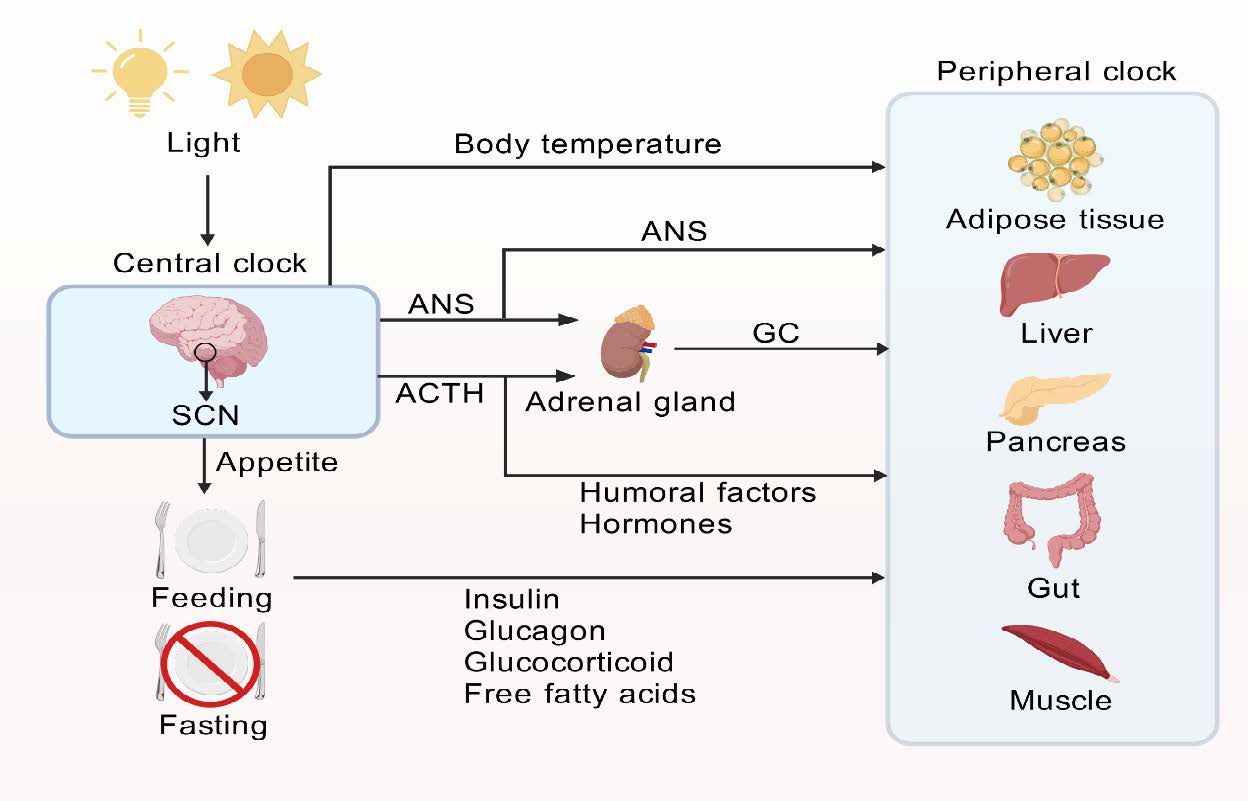
Figure 1. Biological clock regulatory network. SCN, Suprachiasmatic nucleus; GC, Glucocorticoid; ATCH, Adrenocorticotropic hormone; ANS, Autonomic nervous system.
As one of the organs most significantly affected by the biological clock system, the pancreas not only possesses its own intrinsic clock but also maintains normal physiological functions through regulation by the SCN and non-light signals. Given that pancreatic function is closely linked to the endocrine system, dysregulation of biological clock genes may greatly impact its physiological functions [11]. Based on this understanding, clinical trials have focused on optimizing treatment timing to enhance pancreatic function and improve therapeutic outcomes [12, 13].
The role of biological clock genes in pancreatic cancer is gradually being uncovered. This review focuses on the relationship between the biological clock system and the cell cycle, as well as the involvement of tumor suppressor genes and oncogenes in cancer development. Additionally, the latest research progress on biological clock disorders and their implications in pancreatic cancer are summarized, which may help discover new treatment strategies.
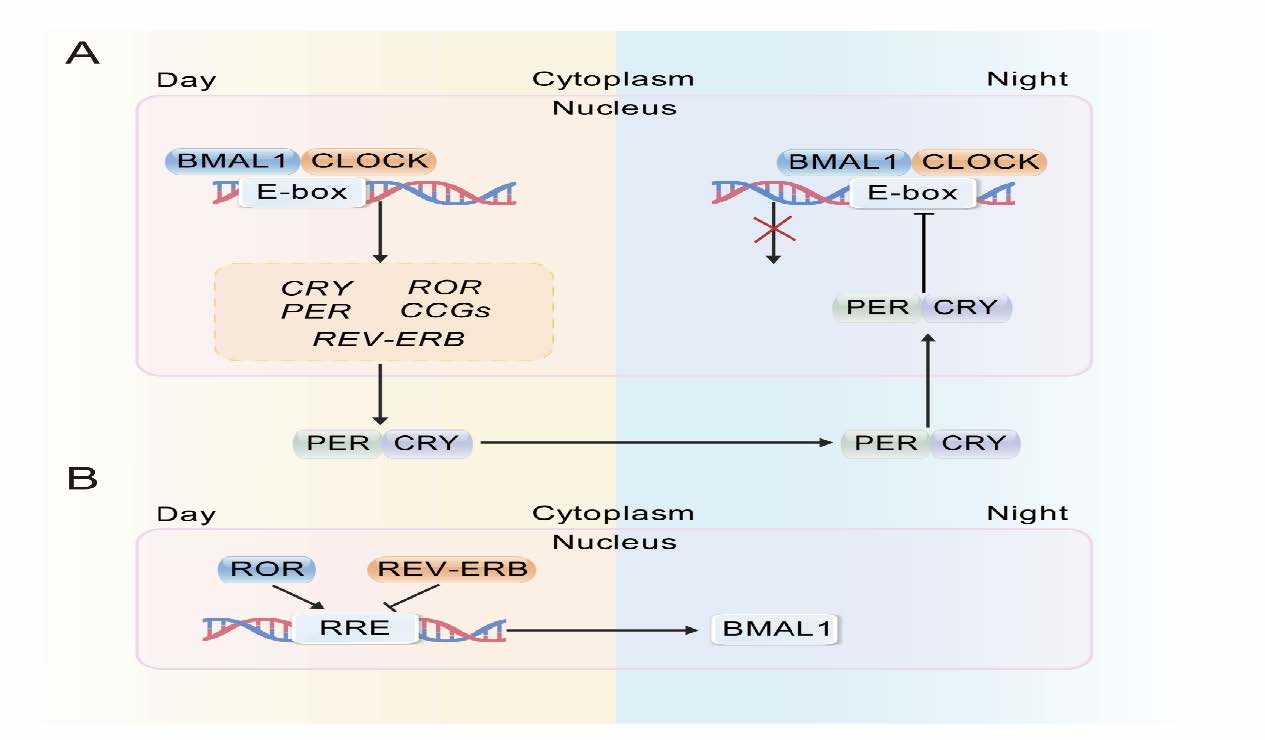
Figure 2. Molecular regulatory mechanisms of the biological clock. (A) Molecular mechanisms of Transcription/Translation Feedback Loop regulation; (B) Regulation of BMAL1 expression.
Another feedback mechanism involves the retinoic acid receptor-related orphan receptor α (RORα) and the heme-regulated nuclear receptor α/β (Reverse Erythroblastosis Virus α/β [Rev-Erbα/β]), which regulate BMAL1 expression by binding to ROR response elements [15]. The CLOCK: BMAL1 heterodimer promotes the transcription of Rev-Erbα, which then enters the nucleus and inhibits BMAL1 production by blocking its transcription. Meanwhile, the PER: CRY protein complex also inhibits the transcription of Rev-Erbα. At the end of the night phase, RORα binds to the BMAL1 promoter, promoting BMAL1 expression and creating favorable conditions for the cycle to restart. These molecular mechanisms oscillate over a roughly 24-hour period (Figure 2B) [16].
Under normal circumstances, biological clock genes support regular cell growth and metabolic functions. However, when the biological clock is disrupted, cell growth and metabolism may be adversely affected, potentially leading to tumor formation and progression [17]. Increasing evidence from studies shows that disruptions in the biological clock are closely linked to the development of pancreatic cancer [18, 19]. Abnormal expression of biological clock genes in pancreatic cancer tissues may disrupt tumor metabolism, alter the immune microenvironment, and promote tumor growth. For instance, the downregulation of the biological clock gene BMAL1 in pancreatic cancer tissues has been associated with the malignant progression of the disease [20]. Additionally, biological clock genes may influence pancreatic cancer development by regulating key signaling pathways, including the p53 tumor suppressor pathway and the transforming growth factor β (TGF-β)/MAD4 pathway [21, 22].
Abnormal expression of biological clock genes: Alterations in core biological clock gene expression in pancreatic cancer tissues
Significant alterations in the expression of core biological clock genes have been observed in pancreatic cancer tissues. An analysis based on The Cancer Genome Atlas database revealed that the expression of multiple biological clock genes (e.g., CRY1, BTRC, CLOCK, CUL1, FBXL3, PER2, PER3, PRKAA1, PRKAA2, NR1D1, NR1D2, RRB, and NFIL3) was significantly higher in pancreatic cancer samples compared to normal samples [23]. Conversely, genes such as DBP, CSNK1D, ARNTL, CSNK1E, SKP1, and RORA were expressed at lower levels, while CRY2 showed no significant difference between normal samples and tumor samples. Additionally, research found that the expression of the BMAL1 gene was downregulated in pancreatic cancer tissues, acting as a tumor suppressor gene, with its expression correlating with clinicopathological characteristics of the disease [24]. Another study reported that the biological clock genes PER1 and PER2 were downregulated in human pancreatic cancer SW1990 cells, and the silencing of Epithelial Cell Transformation Sequence 2 via siRNA inhibited cancer cell proliferation and induced apoptosis by promoting the expression of PER1 and PER2 [25]. Moreover, the expression levels of biological clock genes such as PER1, PER2, PER3, CRY1, CRY2, TIPIN, TIM, CK1β, BMAL-ARNTL, and ClOCK in pancreatic cancer tissues were significantly lower than those in matched adjacent tissues [26]. These changes in the expression of biological clock genes may be closely related to the occurrence and development of pancreatic cancer. Abnormal expression of these biological clock genes may lead to metabolic disturbances within the tumor, alterations in the immune microenvironment, and other changes that accelerate cancer progression.
Biological clock genes and key signaling pathways in pancreatic cancer
Biological clock genes play a crucial role in the occurrence and development of pancreatic cancer, regulating the disease through multiple key signaling pathways. A prominent pathway is the p53 tumor suppressor pathway, which governs cell proliferation, survival, and metabolism [27]. Abnormal expression of biological clock genes, such as BMAL1, may impact the activity of this pathway. The study confirmed that overexpression of BMAL1 significantly inhibits the proliferation and invasion of pancreatic cancer cells while inducing G2/M phase cell cycle arrest [28]. The mechanism involves BMAL1 directly binding to the p53 gene promoter, promoting its transcription and activating downstream tumor suppressor pathways in a p53-dependent manner, thereby exerting anti-tumor effects. This interaction not only reveals a novel function of biological clock genes in pancreatic cancer but also provides a theoretical basis for developing new therapeutic strategies targeting this pathway (Figure 3).
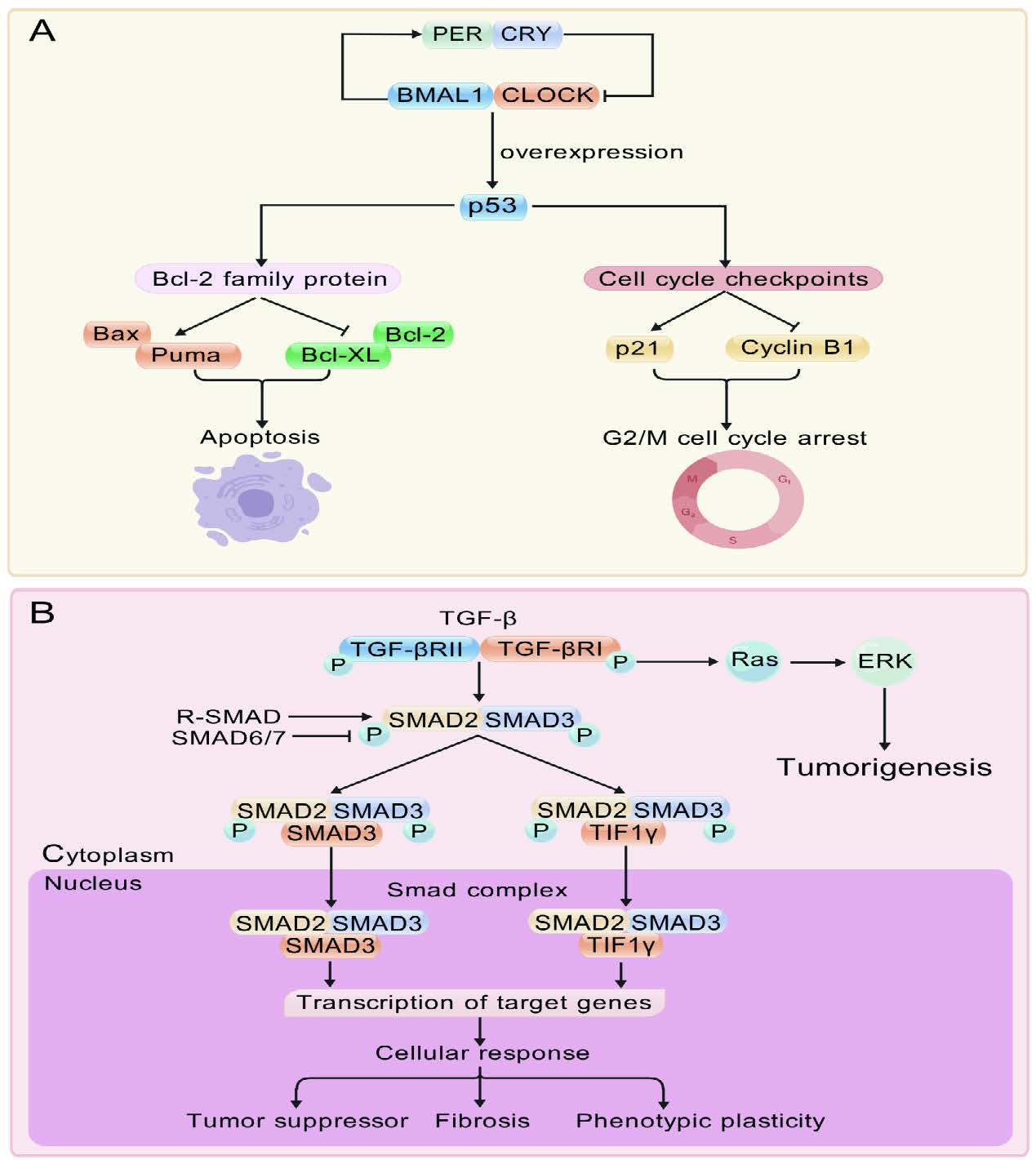
The TGF-β/SMAD4 signaling pathway is also involved in regulating pancreatic cancer through biological clock genes. SMAD4 is a crucial component of the TGF-β signaling pathway, participating in the regulation of processes such as cell growth, differentiation, and apoptosis. SMAD4 mutation in pancreatic cancer disrupts normal TGF-β signaling, resulting in increased proliferation, migration, and invasion of pancreatic cancer cells. These mutations are significantly linked to local infiltration and distant metastasis of pancreatic cancer. In a study by Li et al., the interaction between circadian rhythm and the classical TGF-β signaling pathway was explored in SMAD4-positive and SMAD4-negative pancreatic ductal adenocarcinoma models [22]. They found that in SMAD4-positive pancreatic ductal adenocarcinoma cells, the expression of TGFβ1, SMAD3, SMAD4, and SMAD7 oscillates according to circadian rhythm pattern. Disruption of the biological clock altered the mRNA dynamics of these genes. Additionally, the expression of circadian clock genes such as DEC1, DEC2, and CRY1 also depends on the status of SMAD4. Activation of the TGF-β pathway leads to changes in the biological clock, resulting in cell cycle arrest, accelerated apoptosis, increased invasiveness, and enhanced sensitivity to chemotherapy. The influence of TGF-β on the biological clock depends on SMAD4.
The miR-135b-BMAL1-YY1 signaling regulatory circuit also plays a key role in the development of pancreatic cancer. This pathway influences tumorigenesis and progression by regulating key processes like cell self-renewal, proliferation, and differentiation [29]. Studies have shown that miR-135b directly targets the 3’ untranslated region of BMAL1, thereby disrupting the pancreatic biological clock [30]. This desynchronization between miR-135b and BMAL1 expression undermines the control of local circadian rhythm over tumor suppression, significantly promoting tumor growth in pancreatic cancer cells. YY1, a transcription factor, activates miR-135b and forms a feedback regulatory loop with BMAL1, creating a pathway with considerable predictive and prognostic value in patients with pancreatic cancer.
Therefore, biological clock genes play a complex role in regulating the occurrence and development of pancreatic cancer through multiple key signaling pathways, including the p53 tumor suppressor pathway, the miR-135b-BMAL1-YY1 signaling regulatory circuit, and the TGF-β/SMAD4 signaling pathway. These findings provide new ideas and targets for the precise diagnosis and treatment of pancreatic cancer.
Disruption of the biological clock and prognostic outlook in patients with pancreatic cancer
Abnormal expression of biological clock genes is closely linked to tumor invasiveness, chemotherapy resistance, and survival rates in pancreatic cancer patients. Recent studies have increasingly focused on the role of biological clock genes in predicting pancreatic cancer prognosis. BMAL1 promotes the proliferation of pancreatic cancer cells in vitro by binding to the p53 gene promoter. Research by Jiang et al. demonstrates that silencing BMAL1 in pancreatic cancer BXPC-3 cells induces anti-apoptotic and growth-promoting transcriptomic changes. Conversely, upregulation of BMAL1 inhibits the proliferation and invasion of pancreatic cancer cells, promotes apoptosis, and induces cell cycle arrest at the G2/M phase [24]. Subcutaneous tumor formation in nude mice confirmed that BMAL1 also suppresses the proliferation and invasion of pancreatic cancer cells in vivo [24].
The abnormal expression of biological clock genes also plays a significant role in chemotherapy resistance. A study showed that down-regulation of the BMAL1 gene significantly suppressed the expression of tumor suppressor genes such as p53, p16, RB1, BRCA1, and PTEN in pancreatic cancer cells. This suppression promoted proliferation, migration, and invasion of pancreatic cancer cells and enhanced chemotherapy resistance to gemcitabine [30]. This finding has important implications for pancreatic cancer treatment strategies, suggesting that monitoring the status of biological clock genes could help optimize chemotherapy regimens and improve treatment outcomes.
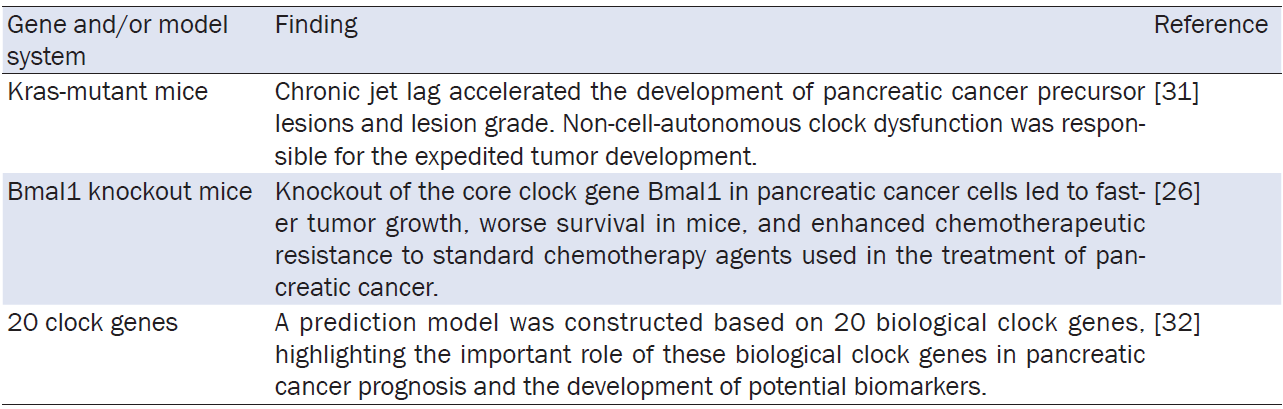
The abnormal expression of biological clock genes is also closely associated with the survival rate of patients with pancreatic cancer (Table 1). A study confirmed that the expression levels of PER1, PER2, PER3, CRY2, Tipin, and CK1β in tumor tissues from pancreatic cancer patients was significantly downregulated compared to benign lesion tissues [26]. Low expression levels of PER1, PER2, PER3, CRY2, TIPIN, CK1β, ClOCK, and Bmal-ARNTL in tumors were significantly linked to decreased survival rates in these patients. Another study indicated that variations in the CLOCK gene, including CLOCKGain and CLOCKLoss, were associated with tumor suppression and promotion, respectively. Among them, pancreatic cancer patients with high expression of the oncogene CLOCK had worse survival outcomes [33]. Zhang et al. investigated the relationship between abnormal expression of clock gene and the prognosis of common abdominal malignancies and found that high expression of the CRY2 gene and low expression of the DEC1 gene were linked to better prognosis, clinical stage, and tumor differentiation in patients with pancreatic cancer [32]. These findings underscore the crucial role of biological clock genes in the prognosis assessment of pancreatic cancer.
By constructing prognostic models based on the expression of biological clock genes, the survival rate of pancreatic cancer patients can be predicted more accurately, facilitating the development of personalized treatment plans. Zhang et al. analyzed clinical data and biological clock gene expression from 260 patients with pancreatic cancer in The Cancer Genome Atlas database and the International Cancer Genome Consortium database [33]. They identified 19 differentially expressed biological clock genes between pancreatic cancer tissues and normal tissues. Through LASSO regression analysis, 10 differentially expressed biological clock genes were identified as independent prognostic predictors for pancreatic cancer patients, leading to the development of a prognostic risk scoring model. A prognostic nomogram was then created, integrating clinicopathological features (e.g., pathological stage) and the risk score, demonstrating high accuracy in predicting the prognosis of pancreatic cancer patients.
Therefore, the abnormal expression of biological clock genes plays an important role in various aspects of pancreatic cancer, including tumor invasiveness, chemotherapy resistance, and patient survival rates. The development of prognostic models provides more accurate predictive tools, aiding in the optimization of treatment plans and improving both outcomes and prognosis for patients with pancreatic cancer.
As diagnostic and prognostic markers
Circadian rhythm genes have the potential to serve as both diagnostic and prognostic biomarkers for pancreatic cancer. Although the field remains in its early stages, next-generation sequencing technology offers a powerful tool for the rapid and accurate analysis of circadian rhythm biomarkers associated with the occurrence, prognosis, and therapeutic response of pancreatic cancer. Dagmura et al. investigated the association between PER2/PER3 gene tandem repeat polymorphisms (VNTR) and the susceptibility and clinical characteristics of pancreatic cancer. The results showed that the frequency of 4R/3R, 3R/3R genotypes, 3R alleles, and the combined genotype PER2/PER3 VNTR 4/5-4R/3R in peripheral blood mononuclear cells of pancreatic cancer patients was significantly higher than in healthy volunteers [34]. The PER2 VNTR 4/5 genotype was associated with peripheral nerve infiltration in pancreatic cancer patients. Additionally, the PER2 VNTR 3R allele may play a crucial role in the development of the disease and could serve as a key biomarker for predicting pancreatic cancer. In a separate study, Zhang et al. screened ten differentially expressed biological clock genes between pancreatic cancer tissues and normal tissues using The Cancer Genome Atlas and International Cancer Genome Consortium databases. A prognostic risk scoring model was developed and showed excellent predictive ability and discrimination for the prognosis of pancreatic cancer patients [32].
As a therapeutic target
Currently, the most effective treatment for pancreatic cancer combines surgical resection with chemotherapy. Standard regimens include gemcitabine alone, gemcitabine with cisplatin, and combination therapies such as oxaliplatin, irinotecan, fluorouracil, and FOLFIRINOX. Other options include gemcitabine with docetaxel and capecitabine, or nanoparticle albumin-bound paclitaxel with gemcitabine. The primary mechanism by which gemcitabine works is by inhibiting DNA replication, thereby preventing tumor cell growth. However, clinical studies have shown that many patients develop resistance to gemcitabine, posing a significant challenge in treating pancreatic cancer [35]. Biological clock genes may influence the sensitivity of pancreatic cancer cells to chemotherapy drugs. For example, miR-135b promotes gemcitabine resistance by suppressing BMAL1. Schwartz et al. examined the effects of disrupting circadian rhythms using a BMAL1 knockout pancreatic cancer model and found that such disruption led to faster cancer growth, shorter survival, and increased resistance to chemotherapy [26]. Additionally, a study indicates that ASF1B may serve as a potential biomarker of pancreatic cancer and a novel therapeutic target. The study compared ASF1B expression levels in pancreatic cancer specimens with those in normal tissues, and found that ASF1B was commonly overexpressed in pancreatic cancer specimens [36]. By regulating the expression of the biological clock gene, it may be possible to improve the response of pancreatic cancer cells to chemotherapy, thereby enhancing treatment outcomes.
Study found that down-regulation of PER3 gene expression in the mouse pancreatic cancer cell line Pan02 inhibited cell proliferation and migration, reduced the stemness of pancreatic cancer stem cells, and suppressed the expression of stemness marker mRNA [37]. Therefore, biological clock genes may serve as potential therapeutic targets for pancreatic cancer. Additionally, a study showed that after human pancreatic cancer PANC-1 cells were treated with the biological clock protein REV-ERB agonist SR9009 for 72 hours, cell viability decreased significantly in a concentration-dependent manner, accompanied by an increased apoptosis rate, upregulated expression of caspase 3 protein and autophagy-related protein P62, and downregulated expression of autophagy-related protein 5 [38]. The observed cytotoxicity reduction further suggests that the biological clock protein REV-ERB agonist has a significant anti-tumor effect on human pancreatic cancer PANC-1 cells. Drug development targeting these biological clock genes may offer new therapeutic solutions for pancreatic cancer.
Circadian rhythm therapy
In clinical practice, all processes regulated by the circadian rhythm are potential targets for new tumor treatments. Circadian rhythm therapy involves targeting clock or clock-controlled gene products and timing treatments accordingly. The first approach aims to target circadian components or restore normal rhythms. For instance, a study showed that the circadian clock component of REV-ERBs is an effective target for alleviating cancer-induced tactile allodynia [39]. L-theanine has been shown to attenuate the viability, proliferation, and migration, while promoting apoptosis of melanoma cells. Additionally, L-theanine significantly enhances the expression of BMAL1, a clock gene in melanoma cells. Notably, the downregulation of BMAL1 suppresses the anti-cancer effects of L-theanine on melanoma cells [40]. A study developed a model to identify regulatory factors of the peripheral biological clock system, finding that modulation of Bmal1 or Per2 transcription, most likely by temperature or nutrient exposure cycles, is most effective in regulating the clock [41]. Another study has shown that cisplatin can stimulate multiple classified molecules, including DNA repair factors, DNA damage recognition factors, and transcription factors, which modulate the circadian clock through two mechanisms: the circadian clock control of DNA excision repair and the effect of circadian clock disruption on apoptosis [42]. Since most drug targets exhibit circadian rhythm behavior, identifying the best times of day and night for treatment application is important for enhancing efficacy and safety. It is worth noting that our understanding of circadian rhythms remains incomplete. The clinical application of circadian rhythm therapy remains complex, as tumors are heterogeneous. Therefore, drug treatment protocols need to be optimized to improve their effectiveness and efficiency.
Looking ahead, in-depth research on how circadian clock genes regulate metabolism and immune escape in pancreatic cancer will be a key focus. Metabolic reprogramming and immune escape are essential steps in the malignant progression of pancreatic cancer, and biological clock genes may play important roles in these processes. Exploring these mechanisms could identify new targets for pancreatic cancer treatment. Additionally, integrating multi-omics data (e.g., genomic, transcriptomic, proteomic, and other types of data) will create new opportunities for studying biological clock genes in pancreatic cancer. This approach will allow for a more comprehensive understanding of the regulatory networks of biological clock genes, helping to identify key genes and pathways involved in pancreatic cancer development. For preclinical research, developing treatment strategies that target biological clock genes will be a crucial task in the future. Constructing animal models with knocked-out or overexpressed biological clock genes will help evaluate the effectiveness and safety of drugs targeting these genes, supporting clinical translation. Ultimately, improving the translational use of biological clock genes in diagnosing and treating pancreatic cancer is our main goal. By investigating the functions and mechanisms of biological clock genes in pancreatic cancer, we aim to develop clinically applicable diagnostic markers and therapeutic targets, ultimately leading to better patient outcomes.
Disruption of biological clock genes expression plays a vital role in the development and progression of pancreatic cancer. An increasing body of evidence has demonstrated that abnormal expression of these genes is closely associated with malignant progression, chemotherapy resistance, and patient prognosis. A comprehensive investigation into the molecular mechanisms involving biological clock genes in pancreatic cancer will not only enhance our understanding of its pathogenesis but also open new avenues for targeted treatment. By examining how biological clock genes interact with key signaling pathways in pancreatic cancer, we can identify new therapeutic targets, refine treatment strategies, and improve patient outcomes. Furthermore, the potential of biological clock genes as diagnostic markers and prognostic indicators in clinical practice should not be underestimated. As research progresses and multi-omics data integration advances, biological clock genes are expected to play a significant role in supporting personalized treatment approaches for pancreatic cancer.
Author contributions: Haoran Huang was responsible for determining the review topic and framework, conducting the primary literature search and selection, writing the core sections,and integrating the initial draft. Yu Ge was responsible for supplementary literature retrieval,data/figure curation, writing specific sections,and reviewing and editing the entire manuscript. Rong Wan contributed to the formulation of the review topic, provided critical guidance on its overall direction and outline, and was responsible for overseeing the entire writing process.All three authors participated in the revision of the manuscript and approved the final version.
[1] Sung H, Ferlay J, Siegel RL, et al. Global Cancer Statistics 2020: GLOBOCAN Estimates of Incidence and Mortality Worldwide for 36 Cancers in 185 Countries. CA Cancer J Clin 2021;71(3):209-249.
[2] Cai J, Chen H, Lu M, et al. Advances in the epidemiology of pancreatic cancer: Trends, risk factors, screening, and prognosis. Cancer Lett 2021;520:1-11.
[3] Shi Z, Lin J, Wu Y, et al. Burden of cancer and changing cancer spectrum among older adults in China: Trends and projections to 2030. Cancer Epidemiol 2022;76:102068.
[4] Chung V, Sun V, Ruel N, et al. Improving Palliative Care and Quality of Life in Pancreatic Cancer Patients. J Palliat Med 2022;25(5):720-727.
[5] Laothamatas I, Rasmussen ES, Green CB, et al. Metabolic and chemical architecture of the mammalian circadian clock. Cell Chem Biol 2023;30(9):1033-1052.
[6] Kavakli IH, Ozturk N, Baris I. Protein interaction networks of the mammalian core clock proteins. Adv Protein Chem Struct Biol 2022;131:207-233.
[7] Koop S, Oster H. Eat, sleep, repeat - endocrine regulation of behavioural circadian rhythms. Febs j 2022;289(21):6543-6558.
[8] Ritonja JA, Aronson KJ, Leung M, et al. Investigating the relationship between melatonin patterns and methylation in circadian genes among day shift and night shift workers. Occup Environ Med 2022.
[9] Papantoniou K, Konrad P, Haghayegh S, et al. Rotating Night Shift Work, Sleep, and Thyroid Cancer Risk in the Nurses' Health Study 2. Cancers (Basel) 2023;15(23):5673.
[10] Lane JM, Qian J, Mignot E, et al. Genetics of circadian rhythms and sleep in human health and disease. Nat Rev Genet 2023;24(1):4-20.
[11] Ruan W, Yuan X, Eltzschig HK. Circadian rhythm as a therapeutic target. Nat Rev Drug Discov 2021;20(4):287-307.
[12] Sulli G, Lam MTY, Panda S. Interplay between circadian clock and cancer: New frontiers for cancer treatment. Trends Cancer 2019;5(8):475-494.
[13] Shafi AA, Knudsen KE. Cancer and the circadian clock. Cancer Res 2019;79(15):3806-3814.
[14] Partch CL, Green CB, Takahashi JS. Molecular architecture of the mammalian circadian clock. Trends Cell Biol 2014;24(2):90-99.
[15] Guillaumond F, Dardente H, Giguère V, et al. Differential control of Bmal1 circadian transcription by REV-ERB and ROR nuclear receptors. J Biol Rhythms 2005;20(5):391-403.
[16] Takahashi JS. Transcriptional architecture of the mammalian circadian clock. Nat Rev Genet 2017;18(3):164-179.
[17] Savvidis C, Koutsilieris M. Circadian rhythm disruption in cancer biology. Mol Med 2012;18(1):1249-1260.
[18] Masri S, Sassone-Corsi P. The emerging link between cancer, metabolism, and circadian rhythms. Nat Med 2018;24(12):1795-1803.
[19] Sancar A, Van Gelder RN. Clocks, cancer, and chronochemotherapy. Science 2021;371(6524):eabb0738.
[20] Jiang W, Zhao S, Jiang X, et al. The circadian clock gene Bmal1 acts as a tumor suppressor in pancreatic cancer by activating the p53 pathway. J Exp Clin Cancer Res 2020;39(1):238.
[21] Shi J, Wang Y, Zhang L, et al. Circadian clock genes in the tumor microenvironment: A new perspective on pancreatic cancer. Front Oncol 2021;11:682983.
[22] Li J, Chen Y, Xu X, et al. SMAD4-dependent regulation of circadian clock genes by TGF-β signaling in pancreatic cancer. Cell Death Dis 2020;11(10):893.
[23] Zhang Y, Liu X, Wang Z, et al. Comprehensive analysis of circadian clock gene expression in pancreatic cancer. J Cancer 2021;12(15):4567-4578.
[24] Jiang W, Zhao S, Jiang X, et al. Bmal1 suppresses pancreatic cancer progression through p53 activation. J Exp Clin Cancer Res 2020;39(1):238.
[25] Liu Y, Zhang H, Li Q, et al. Silencing ECT2 inhibits proliferation and induces apoptosis of pancreatic cancer cells by upregulating PER1 and PER2. Oncol Rep 2020;44(6):2565-2574.
[26] Schwartz PB, Nair JR, Ranganathan P, et al. Circadian clock disruption promotes pancreatic cancer progression and chemoresistance. Cell Rep 2021;37(11):110103.
[27] Levine AJ, Oren M. The first 30 years of p53: Growing ever more complex. Nat Rev Cancer 2009;9(10):749-758.
[28] Jiang W, Zhao S, Jiang X, et al. Bmal1 directly binds to p53 promoter and activates transcription in pancreatic cancer. Cell Death Dis 2021;12(1):18.
[29] Elnaggar M, Wang K, Jiang X, et al. MiR-135b-BMAL1-YY1 loop regulates pancreatic cancer stem cell self-renewal. Mol Cancer 2021;20(1):12.
[30] Zhang Y, Liu X, Li Z, et al. miR-135b disrupts the pancreatic clock by targeting BMAL1 and promotes tumor growth. Cancer Res 2020;80(15):3178-3189.
[31] Kondratova AA, Kondratov RV. The circadian clock and pathology of the ageing brain. Nat Rev Mol Cell Biol 2012;13(5):325-335.
[32] Zhang H, Zhao S, Jiang W, et al. A prognostic risk model based on circadian clock genes for pancreatic cancer. Front Genet 2021;12:738296.
[33] Zhang Y, Liu X, Wang Z, et al. CLOCK gene variants and their dual role in pancreatic cancer suppression and promotion. Cancer Cell Int 2021;21(1):432.
[34] Dagmura H, Ozdemir F, Altun Z, et al. PER2/PER3 VNTR polymorphisms and susceptibility to pancreatic cancer. J Clin Med 2021;10(8):1689.
[35] Li J, Chen Y, Xu X, et al. Role of ASF1B in pancreatic ductal adenocarcinoma and its effect on gemcitabine resistance. Chin J Exp Surg 2024;41(4):728-731.
[36] Kim JH, Youn Y, Lee JC, et al. Downregulation of ASF1B inhibits tumor progression and enhances efficacy of cisplatin in pancreatic cancer. Cancer Biomark 2022;34(4):647-659.
[37] Wang JL, Zheng R, Wang MH, et al. Pancreatic cancer metastasis inhibition by circadian gene PER3 based on pancreatic cancer stem cells regulation. J Dalian Univ Technol 2024;64(3):236-242.
[38] Fu X, Xu CY. Antitumor effect and mechanisms of circadian protein REV-ERB agonist on human pancreatic cancer PANC-1 cells in vitro. Chin J Clin Pharmacol 2022;38(22):2684-2687.
[39] Yasukochi S, Yamakawa W, Taniguchi M, et al. The Circadian Clock Component REV-ERB Is an Analgesic Target for Cancer-Induced Tactile Pain Hypersensitivity. J Neurosci 2025;45(22):e1969242025.
[40] Zhang R, Zheng S, Guo Z, et al. L-Theanine inhibits melanoma cell growth and migration via regulating expression of the clock gene BMAL1. Eur J Nutr 2022;61(2):763-777.
[41] Martinelli J, Dulong S, Li XM, et al. Model learning to identify systemic regulators of the peripheral circadian clock. Bioinformatics 2021;37(Suppl_1):i401-i409.
[42] Sadiq Z, Varghese E, Büsselberg D. Cisplatin's dual-effect on the circadian clock triggers proliferation and apoptosis. Neurobiol Sleep Circadian Rhythms 2020;9:100054.
ISSN: 2957-5524
Volume 1, Issue 1
April 2025
Pages: 1-48


 Log In

 On This Page
 CITE
CITE