 Log In
Search




 Open Access
 zhoumiao@jszlyy.com.cn
Miao Zhou, Department of Anesthesiology, The Affiliated Cancer Hospital of Nanjing Medical University & Jiangsu Cancer Hospital & Jiangsu Institute of Cancer Research, No. 42, Baiziting, Xuanwu District, Nanjing 210009, Jiangsu, China. Tel: +86-18217567295. E-mail: zhoumiao@jszlyy.com.cn.
Received January 29, 2026; Accepted April 27, 2026; Published June 16, 2026
The virtual-real integrated teaching model demonstrates significant advantages. The experimental group showed significantly higher course scores, clinical reasoning ability, and teaching satisfaction compared to the control group, with all differences being statistically significant.
Virtual simulation technology provides substantial value in medical education. It effectively addresses the limitations of traditional teaching methods, standardizes instructional outcomes, and offers a viable pathway for the digital transformation of medical education.
Future efforts should focus on integrating virtual simulation with artificial intelligence to enable personalized and intelligent approaches to medical teaching.
Open Accesszhoumiao@jszlyy.com.cnMiao Zhou, Department of Anesthesiology, The Affiliated Cancer Hospital of Nanjing Medical University & Jiangsu Cancer Hospital & Jiangsu Institute of Cancer Research, No. 42, Baiziting, Xuanwu District, Nanjing 210009, Jiangsu, China. Tel: +86-18217567295. E-mail: zhoumiao@jszlyy.com.cn.
Received January 29, 2026; Accepted April 27, 2026; Published June 16, 2026
The virtual-real integrated teaching model demonstrates significant advantages. The experimental group showed significantly higher course scores, clinical reasoning ability, and teaching satisfaction compared to the control group, with all differences being statistically significant.
Virtual simulation technology provides substantial value in medical education. It effectively addresses the limitations of traditional teaching methods, standardizes instructional outcomes, and offers a viable pathway for the digital transformation of medical education.
Future efforts should focus on integrating virtual simulation with artificial intelligence to enable personalized and intelligent approaches to medical teaching.
Objective: With the ongoing digital transformation of higher education in recent years, virtual simulation experiment teaching has emerged as a key direction for instructional reform in universities. Taking the course Pain Diagnostics and Therapeutics offered by the School of Anesthesiology at Wannan Medical University as an example, this study aimed to evaluate the effectiveness of a virtual simulation experiment system in the experimental teaching of this course. Methods: A total of 236 anesthesiology students from the class of 2021 were enrolled as research participants and randomly divided into a control group and an experimental group. The control group received traditional teaching combining theoretical lectures with bedside clinical observation. The experimental group underwent a blended teaching model consisting of virtual simulation teaching plus bedside clinical observation, which included three stages: online virtual pre-training, offline inclass hands-on practice, and clinical observation with virtual-real mutual verification. Results: The experimental group demonstrated significantly better performance than the control group across all evaluation indicators (all P<0.001). Regarding course scores, the experimental group achieved a mean score of 90.98±6.23, which was significantly higher than that of the control group (85.28±4.42). The experimental group also showed marked superiority in regular assessment scores (92.58±5.42 vs. 84.56±5.44) and final theoretical examination scores (90.30±6.58 vs. 85.59±3.98). In terms of clinical reasoning ability, the mean score of the experimental group reached 27.55±1.59, far exceeding that of the control group (20.42±2.87). Regarding teaching satisfaction, the experimental group had significantly higher proportions of students reporting enhanced learning interest (91.53% vs. 55.08%), in-depth understanding of learning content (80.51% vs. 63.56%), and a comfortable clinical teaching atmosphere (69.49% vs. 49.15%) compared with the control group (all P<0.05). Conclusion: The blended teaching model integrating virtual and real practice improves teaching effectiveness, helps consolidate students' professional theoretical foundation, and enhances their clinical reasoning ability. Therefore, this approach holds positive reference value for the teaching reform of Pain Diagnostics and Therapeutics.
Keywords: Pain diagnostics and therapeutics, Virtual simulation, Experimental teaching, Teaching reform
With the widespread adoption and continuous advancement of modern educational information technology, virtual simulation has emerged as an innovative teaching method and has become a key driver of reform in medical education [1, 2]. As an important subspecialty of anesthesiology, Pain Diagnostics and Therapeutics features is characterized by abstract theories and a strong emphasis on practical application [3]. Traditional approaches to teaching this course face several prominent pedagogical challenges, including limited access to typical clinical pain cases, the inability to safely and repeatedly perform high-risk procedures on real patients, and difficulties in conducting standardized evaluations of teaching effectiveness [4, 5]. These issues often result in students struggling to integrate theoretical knowledge with clinical practice, thereby hindering the development of their clinical reasoning and hands-on skills, and ultimately leading to unsatisfactory learning outcomes.
By constructing a highly realistic, interactive virtual environment that presents authentic three-dimensional clinical scenarios and simulates clinical inquiry through speech recognition, virtual simulation technology offers an effective simulated platform for clinical students to practice history-taking and procedural skills (Figure 1). It enables risk-free and repeatable simulation of various pain diagnosis and treatment scenarios, allowing students to engage in immersive, end-to-end training that covers disease inquiry, auxiliary examinations, diagnosis, differential diagnosis, treatment, and technical procedures. Consequently, this technology provides essential technical support for shifting the focus of teaching from knowledge transmission to competency-based training [6, 7].

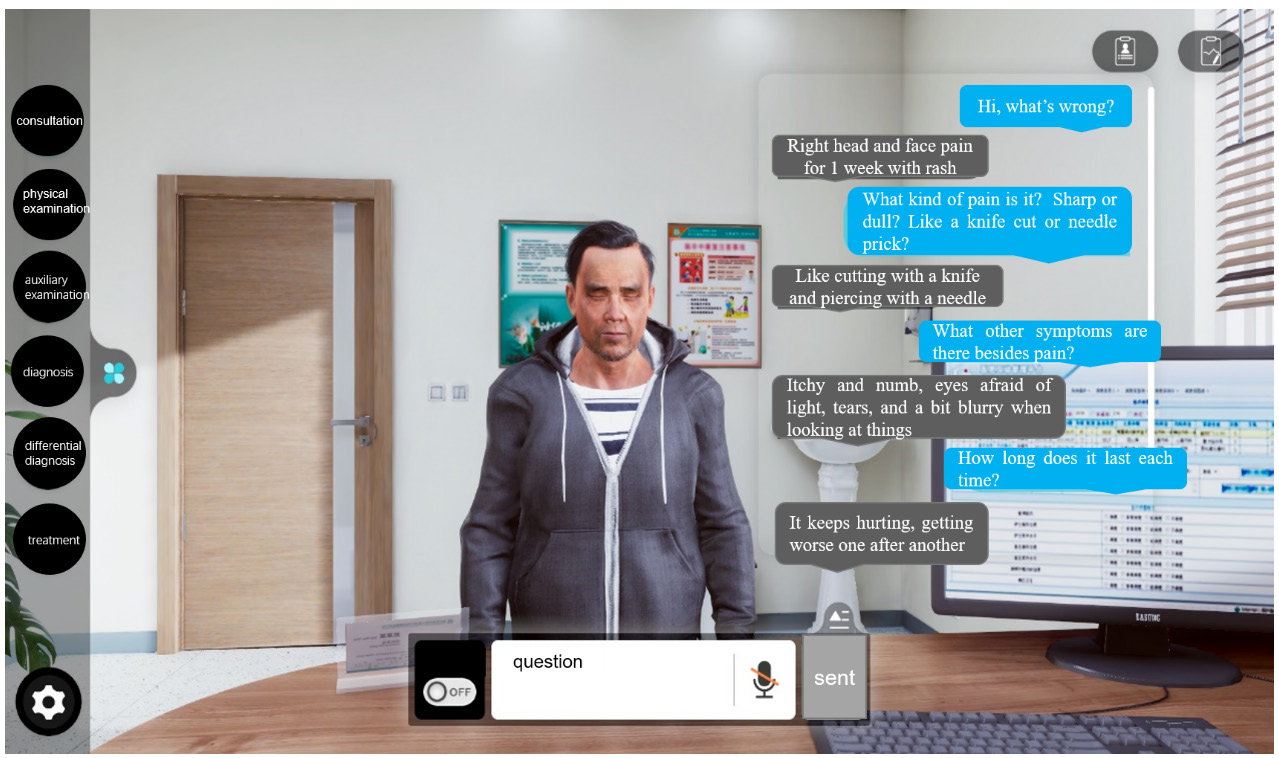
Figure 1. Three-dimensional clinical scenarios and simulated clinical inquiry. This image is from a self-developed virtual simulation experiment—“Diagnosis and treatment of trigeminal neuralgia in the head and face virtual simulation experiment” (website: https://stu.medic-tutor.cn).
2.1 Research subjects
A total of 236 full-time undergraduate students majoring in Anesthesiology (Class of 2021) at Wannan Medical University were enrolled as research participants. The cohort included 120 males and 116 females, aged 21 to 23 years. Sample size was calculated using the two-independent-samples t-test formula, referencing relevant findings from studies on virtual simulation teaching in medical education. With a significance level (α) of 0.05, a statistical power (1−β) of 0.80, an expected mean difference of 5 points in clinical reasoning ability scores between the two groups, and a pooled standard deviation (SD) of 4 points, the minimum required sample size for each group was calculated to be 102 students. Accounting for a potential 15% attrition rate, the final sample size was set at 118 students per group, totaling 236 students. A simple randomization method was employed using a random number table generated by SPSS 22.0 software. Each eligible student was assigned a unique serial number from 1 to 236. The software generated 236 corresponding random numbers. Students with odd random numbers were allocated to the control group, and those with even random numbers were allocated to the experimental group. No students were lost to follow-up during the entire study process; all participants completed the course learning and all relevant assessments.
This study was reviewed and approved by the Institutional Review Board of Wannan Medical University. As this study involved routine teaching evaluation with non-invasive data collection and no identifiable personal information, the requirement for written informed consent was waived by the Institutional Review Board. All participants were informed of the study purpose and agreed to participate voluntarily.
Participants were divided into two groups according to teaching modalities: a control group receiving theoretical lectures plus bedside probation, and an experimental group taught with virtual simulation combined with bedside probation. All course instructors were from the Department of Anesthesiology at The First Affiliated Hospital of Wannan Medical University. All instructors held associate senior professional titles or higher and had more than 10 years of experience in clinical teaching.
2.2 Experimental arrangement and implementation plan
Experimental group: The virtual simulation experiment on trigeminal neuralgia was selected as the main research content from the established virtual simulation experimental projects. With information technology support from Shanghai Huayi Information Technology Co., Ltd., a virtual-real integrated experimental teaching approach was implemented for students in the experimental group. The teaching process was divided into three stages:
Online virtual pre-training: Before class, students completed previews of experimental materials and theoretical tests on the “StudyLink” platform. They then accessed the virtual simulation platform to conduct independent simulated operations, including clinical reasoning training for trigeminal neuralgia of the head and face (Figure 1).
Offline in-class in-depth practice: During class, the instructor first delivered targeted intensive lectures and clinical demonstrations based on learning data generated from the virtual training activities.
Clinical probation stage: Students proceeded to the pain procedures ine ward for hands-on procedures and clinical history-taking. The core objective of this stage was to consolidate and verify the results of virtual simulation, achieving “virtual-real mutual verification”. Students were required to complete an experimental report integrating theoretical analysis and clinical practice using the virtual simulation system.
Control group: The traditional teaching method combining theoretical instruction with bedside probation was adopted. Before class, instructors released experimental course materials via the “StudyLink” platform, guided students to preview and clarify learning tasks, and required them to complete relevant theoretical tests to consolidate basic knowledge. During class, instructors illustrated the procedures and principles of history-taking, diagnosis, and treatment for trigeminal neuralgia of the head and face using case examples, emphasizing key aspects of clinical reasoning such as the diagnosis of trigeminal neuralgia. Subsequently, students entered the clinical probation stage, where they conducted independent history-taking in the pain medicine ward and finally completed the experimental report on their own.
Post-course assessment for both groups: A brief flipped classroom session was conducted for both groups after each course, during which students briefly reported their mastery of the clinical knowledge learned. A final course examination was also organized for both groups upon completion of the course.
2.3 Outcome measures
2.3.1 Final course scores
In the achievement evaluation system for the Pain Diagnostics and Therapeutics course, the total score (full score =100) consisted of two components: the theoretical assessment score (accounting for 70%) and the experimental assessment score (accounting for 30%). The theoretical assessment score (70%) covered basic theories of pain diagnosis and treatment, disease pathogenesis, and clinical guidelines. The experimental assessment score (30%) included experimental operation, experimental report writing, and clinical probation performance.
The assessment tools and scoring criteria were standardized and applied uniformly for both groups. All examinations were conducted in a closed-book format with invigilation to ensure objectivity.
2.3.2 Clinical reasoning ability
Clinical reasoning ability was assessed using case-based analytical questions (full score =30 points) incorporated into the final course examination. These questions were developed based on real, typical clinical cases in pain medicine (e.g., trigeminal neuralgia, postherpetic neuralgia).
Question development and psychometric validation: Pre-testing and psychometric verification of the case-based questions were completed three months prior to the formal assessment. The questions were piloted on 40 anesthesiology students from the Class of 2020 (who were not involved in the formal study). Item analysis was subsequently conducted to verify discriminability (discrimination index >0.30) and difficulty (difficulty coefficient between 0.50 and 0.70). The content validity index of the question set was confirmed as 0.92 by five senior experts in pain medicine and medical education.
Scoring criteria: Detailed scoring criteria were established for each dimension of the case analysis, as follows: clinical inquiry (6 points), including completeness of symptom collection and rationality of inquiry logic; physical examination (6 points), including standardization of examination items and accuracy of positive sign identification; auxiliary examinations (6 points), including rationality of examination selection and correct interpretation of results; and diagnosis and differential diagnosis (12 points), including accuracy of the definitive diagnosis and rationality of differential diagnosis reasoning and basis.
Scoring implementation and inter-rater reliability: Scoring was performed independently by two senior attending physicians from the Department of Anesthesiology, each with over 10 years of clinical and teaching experience. Both raters received uniform training on the scoring criteria prior to the assessment and were blinded to the students’ group assignments. Inter-rater reliability was assessed using the intraclass correlation coefficient, which yielded a value of 0.94, indicating excellent consistency between the two raters. In cases where the scoring discrepancy between the two raters exceeded 2 points, a third attending physician (chief physician level) was invited to conduct a joint review and determine the final score through consensus [8, 9].
2.3.3 Satisfaction with teaching effectiveness
This indicator was evaluated across three specific dimensions to comprehensively reflect students’ subjective perception of the teaching mode. The three dimensions were: ① Enhanced learning interest—the degree to which the teaching mode stimulated students’ initiative and interest in learning Pain Diagnostics and Therapeutics; ② In-depth understanding of learning content—the degree to which the teaching mode helped students comprehend and master the theoretical and practical knowledge of the course; and ③ Comfortable clinical teaching atmosphere—the degree of students’ sense of ease and acceptance during the teaching process, particularly in clinical probation and simulated operation sessions. After course completion, an anonymous questionnaire survey was administered to students in both groups via the SoJump platform. The questionnaire was developed by the research team. Content validity was verified by three medical education experts (content validity index =0.89), and internal consistency reliability was assessed using Cronbach’s α coefficient (0.91). A 4-point Likert scale (1= Strongly Disagree, 2= Disagree, 3= Agree, 4= Strongly Agree) was adopted, with each dimension scored independently. Students completed the anonymous ratings based on their actual learning experiences. The questionnaire recovery rate was 100% for both groups [10, 11].
2.4 Statistical analysis
Data analysis was performed using SPSS 22.0 statistical software, and statistical graphs were generated using GraphPad Prism 7.0 software. Prior to formal statistical analysis, the normality of the distribution of measurement data was tested using the Shapiro-Wilk test, and homogeneity of variance was verified using the Levene’s test. The results showed that all measurement data in this study followed a normal distribution (P>0.05) and exhibited homogeneity of variance (P>0.05), thereby meeting the assumptions for parametric tests. Measurement data were expressed as mean ± SD, and the independent-samples t-test was used for intergroup comparisons of continuous variables. Categorical data were presented as n (%), and the Pearson’s chi-square test was used for intergroup comparisons; continuity correction was applied when necessary. A P-value of less than 0.05 was considered statistically significant.
3.1 Comparison of general data between the two groups
There were no statistically significant differences between the experimental group and the control group in terms of gender distribution, age, or mean scores in Anesthesia Physiology and Internal Medicine (all P>0.05), indicating that the two groups were comparable in baseline characteristics. The detailed baseline data are presented in Table 1.

Note: Data are presented as mean ± standard deviation (x̄±SD) for continuous variables and n (%) for categorical variables.
3.2 Comparison of course scores
The experimental group had significantly higher formative assessment scores, final theoretical examination scores, and overall course scores in Pain Diagnostics and Therapeutics compared with the control group (all P<0.001). Detailed results are shown in Table 2.

Note: Data are presented as mean ± standard deviation (x̄±SD).
3.3 Clinical reasoning ability
In all four evaluation dimensions of clinical reasoning ability (clinical history-taking, physical examination, auxiliary examinations, and diagnosis and differential diagnosis), the experimental group achieved significantly higher scores than the control group, and all intergroup differences were statistically significant (all P<0.001). Notably, the experimental group demonstrated a prominent advantage in the dimension of diagnosis and differential diagnosis, which showed the largest score gap between the two groups. Detailed data on the total score and each dimension score are presented in Table 3.

Note: Data are presented as mean ± standard deviation (x̄±SD).
3.4 Satisfaction with teaching effectiveness
Students in the experimental group reported significantly higher satisfaction with teaching effectiveness compared with those in the control group. Across all three evaluation dimensions, the number of students in the experimental group who reported enhanced learning interest, in-depth understanding of learning content, and a comfortable clinical teaching atmosphere was significantly higher than that in the control group (all P<0.05). Detailed results are presented in Table 4.

In this study, the independently developed virtual simulation experiment platform was deeply integrated into the Pain Diagnostics and Therapeutics course, and a three-stage teaching model consisting of “online virtual pre-training/offline in-class intensive teaching and practice/clinical bedside practice verification” was constructed, thereby incorporating modern information technology into traditional experimental teaching [12-15]. These findings are consistent with the core conclusions of numerous domestic and international studies on virtual simulation teaching in medical education and further provide empirical evidence supporting the application of virtual simulation technology in the specialized teaching of pain medicine.
In terms of academic performance improvement, the experimental group demonstrated significant advantages in regular assessment scores, final theoretical examination scores, and overall course scores (all P<0.001), which is consistent with the findings of Bi et al. on case-based learning method in teaching postgraduate students of medical oncology and Liu L et al. on preclinical orthodontic training with haptic-enhanced VR simulation [15, 16]. The fundamental reason for this improvement is that the online virtual pre-training stage overcomes the time and space constraints of traditional teaching: students can repeatedly simulate clinical operations and apply theoretical knowledge in a risk-free virtual environment, thereby compensating for the “one-time teaching” limitation of traditional theoretical lectures and solidifying their professional knowledge foundation [17, 18]. More importantly, the virtual simulation platform generates real-time learning data for instructors, enabling them to deliver targeted intensive lectures and clinical demonstrations during offline classes. This student-centered teaching design effectively improves the efficiency of knowledge transmission and absorption, which is key to the significant academic performance improvement observed in the experimental group. This study found that the experimental group was significantly superior to the control group in terms of final course scores, quantitative scores of clinical reasoning ability, and satisfaction with teaching effectiveness. Notably, the experimental group achieved a much higher mean clinical reasoning score with a smaller SD, indicating that virtual simulation teaching not only generally improves students’ clinical reasoning ability but also helps standardize and homogenize teaching outcomes, effectively reducing the variability in student competencies often seen under the traditional teaching model. This finding is consistent with the research conclusions of many domestic scholars. Ward-Gaines et al. also reported similar improvements in competency in simulation-based emergency medicine teaching, while Morel et al. highlighted the advantages of virtual systems in standardized assessment [19, 20].
In terms of teaching satisfaction, the experimental group showed significantly higher levels of recognition in enhanced learning interest, in-depth understanding of learning content, and a comfortable clinical teaching atmosphere (all P<0.05), which is consistent with the findings of Tyransky et al., who reported that integrating virtual technology with artificial intelligence can improve students’ teaching satisfaction [17]. The virtual simulation teaching model changes the passive learning state of students traditionally seen in conventional teaching. Specifically, the interactive and immersive nature of virtual operations stimulates students’ learning initiative and curiosity, while the “virtual-real mutual verification” during the clinical probation stage enables students to apply the knowledge and skills acquired in the virtual environment to real clinical practice, thereby enhancing their sense of achievement and recognition of the teaching process. The comfortable clinical teaching atmosphere is also closely related to the risk-free virtual pre-training: by mastering basic clinical operation skills and history-taking logic before bedside probation, students experience less anxiety when facing real patients and gain greater confidence in clinical practice, thus improving the subjective experience of clinical teaching.
This study has certain limitations that need to be acknowledged and addressed in future research. First, the research subjects were limited to undergraduate anesthesiology students from a single grade at one medical college, and the sample source is relatively homogeneous, which may limit the generalizability of the research results. The teaching effectiveness of the virtual-real integrated model needs to be further verified in multi-center, multi-grade, and multi-professional samples. Second, the follow-up observation period was insufficient. This study only evaluated short-term teaching effects through final course scores and immediate assessments of clinical reasoning ability, without tracking the long-term impact of this teaching model on students’ clinical practice competency after they enter clinical practice. Third, the virtual simulation platform still has room for optimization. The current platform primarily simulates typical clinical scenarios of trigeminal neuralgia, and the coverage of pain-related disease types is relatively limited, which cannot fully meet the diverse training needs for clinical reasoning in pain medicine. Fourth, this study did not conduct subgroup analyses based on students’ academic performance levels. Therefore, the differential effects of the virtual-real integrated teaching model on students with different learning foundations needs to be further explored.
Integrating virtual simulation technology into course teaching significantly enhanced students’ learning interest, clinical reasoning ability, and overall professional competencies. Taking the virtual simulation experiment on trigeminal neuralgia as an example, this study examined the implementation of this teaching reform in specific educational practice. The results demonstrate that this reform improved students’ academic performance, consolidated their professional theoretical foundation, and enhanced their clinical reasoning ability, thus providing reference value for the teaching reform of Pain Diagnostics and Therapeutics.
Author contributions
Shangping Fang conceived and designed the study, developed the virtual simulation experiment system, collected and analyzed the data, drafted and revised the manuscript. Huaichang Wen participated in the implementation of teaching interventions, collected clinical assessment data, and developed the virtual simulation experiment system. Miao Zhou assisted in statistical analysis, provided critical feedback, supervised the entire research process, and finalized the manuscript for submission.
Funding
This work was supported by Anhui Teaching Quality and Teaching Reform Project (2024syyj039) and the Quality Engineering Project of Wannan Medical University (2024jyxm35).
Data availability
The datasets generated and/or analyzed during the current study are not publicly available due to privacy restrictions on student academic records. However, they are available from the first author upon reasonable request.
Ethics approval and consent to participate
This study was reviewed and approved by the Institutional Review Board of Wannan Medical University. As this study involved routine teaching evaluation with non-invasive data collection and no identifiable information, the requirement for written informed consent was waived by the Institutional Review Board. All participants were informed of the study purpose and agreed to participate voluntarily.
Consent for publication
Not applicable.
Competing interests
The authors declare no competing interests.
Acknowledgements
Not applicable.
[1] Berges AJ, Vedula SS, Malpani A, Chen CCG. Virtual reality simulation has weak correlation with overall trainee robot-assisted laparoscopic hysterectomy performance. J Minim Invasive Gynecol. 2022 Apr;29(4):507-518. https://doi.org/10.1016/j.jmig.2021.12.002
[2] Wang P, Wu S, Gao L, Ning Y, Zhang C, Pan S, et al. The effect of virtual simulation technology applied to undergraduate teaching of periodontal probing. Eur J Dent Educ. 2024 May;28(2):461-470. https://doi.org/10.1111/eje.12970
[3] Badel T, Zadravec D, Basic Kes V, Smoljan M, Kocijan Lovko S, Zavoroe I, et al. Orofacial pain - diagnostic and therapeutic challenges. Acta Clin Croat. 2019 Jun;58(Suppl 1):82-89. https://doi.org/10.20471/acc.2019.58.s1.12
[4] Ba H, Zhang L, Yi Z. Enhancing clinical skills in pediatric trainees: A comparative study of ChatGPT-assisted and traditional teaching methods. BMC Med Educ. 2024 May 22;24(1):558. https://doi.org/10.1186/s12909-024-05565-1
[5] Trullas JC, Blay C, Sarri E, Pujol R. Effectiveness of problem-based learning methodology in undergraduate medical education: A scoping review. BMC Med Educ. 2022 Feb 17;22(1):104. https://doi.org/10.1186/s12909-022-03154-8
[6] de Mello WM, Dutra V, Maracci LM, Savegnago GDO, Serpa GF, Liedke GS. New scenarios for training in oral radiology: Clinical performance and predoctoral students' perception of 3D-printed mannequins. Dentomaxillofac Radiol. 2024 Oct;53(7):501-508. https://doi.org/10.1093/dmfr/twae035
[7] Shorey S, Ang E, Yap J, Ng ED, Lau ST, Chui CK. A Virtual Counseling application using artificial intelligence for communication skills training in nursing education: Development study. J Med Internet Res. 2019 Oct 29;21(10):e14658. https://doi.org/10.2196/14658
[8] Levett-Jones T, Hoffman K, Dempsey J, Jeong SY, Noble D, Norton CA, et al. The 'five rights' of clinical reasoning: An educational model to enhance nursing students' ability to identify and manage clinically 'at risk' patients. Nurse Educ Today. 2010 Aug;30(6):515-2020. https://doi.org/10.1016/j.nedt.2009.10.020
[9] Richards JB, Hayes MM, Schwartzstein RM. Teaching clinical reasoning and critical thinking: From cognitive theory to practical application. Chest. 2020 Oct;158(4):1617-1628. https://doi.org/10.1016/j.chest.2020.05.525
[10] Asogwa OA, Koekkoek JAF, Peeters MCM, Zwinkels H, Vos MJ, Dirven L, et al. Challenges in interpreting individual-level changes in health-related quality of life in patients with glioma using minimally important differences (MIDs) and a 4-point Likert scale. Qual Life Res. 2025 Oct;34(10):2809-2819. https://doi.org/10.1007/s11136-025-04029-3
[11] Marks L, O'Sullivan L, Pytel K, Parkosewich JA. Using a teachback intervention significantly improves knowledge, perceptions, and satisfaction of patients with nurses' discharge medication education. Worldviews Evid Based Nurs. 2022 Dec;19(6):458-466. https://doi.org/10.1111/wvn.12612
[12] Fisher KJ, Satin AM, Ohnmeiss DD, Guyer RD. Physical and virtual simulation in spine surgery training. Spine. 2025 Aug 15;50(16):E314-E323. https://doi.org/10.1097/brs.0000000000005386
[13] Kassutto S, Clancy C, Harbison S, Tsao S. A virtual simulation-based clinical skills course. Clin Teach. 2024 Aug;21(4):e13727. https://doi.org/10.1111/tct.13727
[14] Blythe J, Patel NSA, Spiring W, Easton G, Evans D, Meskevicius-Sadler E, et al. Undertaking a high stakes virtual OSCE ("VOSCE") during Covid-19. BMC Med Educ. 2021 Apr 20;21(1):221. https://doi.org/10.1186/s12909-021-02660-5
[15] Liu L, Qin J, Pan Y, Wang H, Lu X, Chu F, et al. Evaluating a preclinical orthodontic training using haptic-enhanced VR simulation system: A longitudinal study. BMC Med Educ. 2025 Apr 8;25(1):497. https://doi.org/10.1186/s12909-025-07036-7
[16] Bi M, Zhao Z, Yang J, Wang Y. Comparison of case-based learning and traditional method in teaching postgraduate students of medical oncology. Med Teach. 2019 Oct;41(10):1124-1128. https://doi.org/10.1080/0142159x.2019.1617414
[17] Tyransky CE, Paulus K, Langmead E, Miller DM, Smith CR, Hughes F, et al. Integration of virtual technology and artificial intelligence improves satisfaction, patient safety, and nursing workforce efficiency. J Nurs Care Qual. 2025 Jul-Sep;40(3):193-201. https://doi.org/10.1097/ncq.0000000000000842
[18] Winpenny EM, Miani C, Pitchforth E, King S, Roland M. Improving the effectiveness and efficiency of outpatient services: A scoping review of interventions at the primary-secondary care interface. J Health Serv Res Policy. 2017 Jan;22(1):53-64. https://doi.org/10.1177/1355819616648982
[19] Ward-Gaines J, Buchanan JA, Angerhofer C, McCormick T, Broadfoot KJ, Basha E, et al. Teaching emergency medicine residents health equity through simulation immersion. AEM Educ Train. 2021 Sep 29;5(Suppl 1):S102-S107. https://doi.org/10.1002/aet2.10680
[20] Morel M, Bideau B, Lardy J, Kulpa R. Advantages and limitations of virtual reality for balance assessment and rehabilitation. Neurophysiol Clin. 2015 Nov;45(4-5):315-326. https://doi.org/10.1016/j.neucli.2015.09.007
ISSN: 3007-0007
Volume 2, Issue 1
April 2026
Pages: 1-63


 Log In

 On This Page
 CITE
CITE