

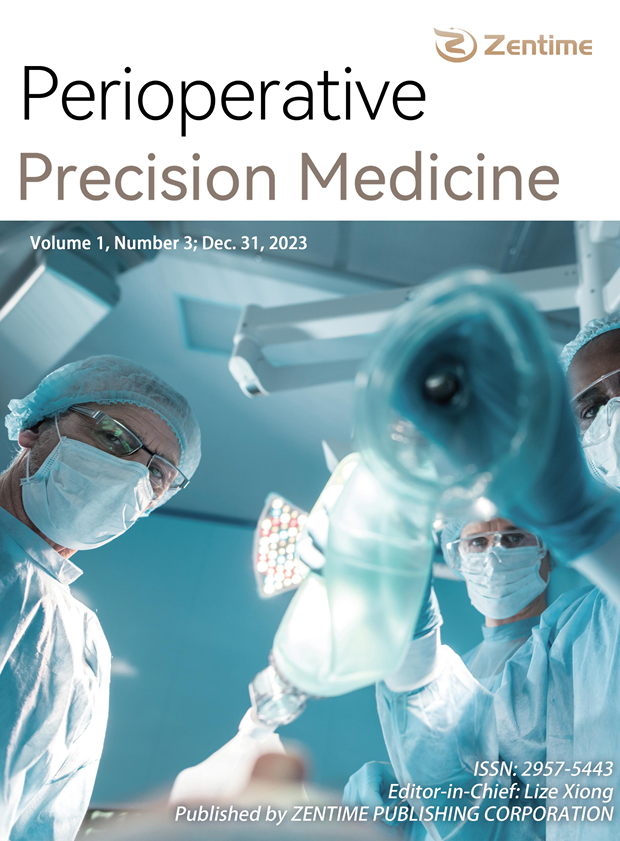
Volume 1, Issue 3

Volume 1, Issue 3

December 2023

Pages: 101-147

PDFs

Volume 1, Issue 3

Review Article
Open Access
Thyroid disease-related sleep disorders and its diagnostic and therapeutic recommendations: A literature review
Qin Yin
Qin Yin
Department of Pain Clinic, The Affiliated Hospital of Xuzhou Medical University, Xuzhou 221000, China.
,
Jinfeng Wang
Jinfeng Wang
Department of Anesthesiology, Xuzhou Central Hospital, Xuzhou 221000, China.
,
Shu Wang
Shu Wang
Department of Anesthesiology, Yancheng Third People's Hospital, Yancheng 224000, China.
,
Yu'e Sun
Yu'e Sun
Department of Anesthesiology, Nanjing Drum Tower Hospital, The Affiliated Hospital of Nanjing University Medical School, Nanjing 210000, China.
,
Wei Cheng
Wei Cheng
hayyyzxx@163.com
Department of Anesthesiology, Huai'an First People's Hospital Affiliated to Nanjing Medical University, Huai'an 223000, China.
,
Yinming Zeng
Yinming Zeng
xzkj2297@163.com
Department of Anesthesiology, The Affiliated Hospital of Xuzhou Medical University, No.99 West Huaihai Road, Xuzhou 221000, China.
Article Preview PDF CITE Article Preview
As perioperative medicine evolves, more hospitals are offering comfort sleep clinics. Thyroid disorders (e.g., hypothyroidism, hyperthyroidism, and thyroid cancer) affect the peripheral circadian clock. Elevated serum thyroid-stimulating hormone levels have been found to associate with the incidence of thyroid cancer in humans, but the relationship between circadian disruption and thyroid disease requires further investigation. Malignant transformation of thyroid nodules is characterized by disruption of the expression of biological clock genes. Sleep clinics often see patients complaining of sleepiness and tinnitus. These patients often have comorbid thyroid disorders and are therefore highly susceptible to misdiagnosis or underdiagnosis. In this article, we first summarize this category of disorders, which we propose to classify as insomnia secondary to somatic disease and define as thyroid disease-related sleep disorder (TSD). The primary and common clinical complaints of TSD patients are different types of sleep disorders. In addition, we attempt to provide some preliminary diagnostic and therapeutic recommendations for TSD in the hope that it may assist healthcare professionals in the early diagnosis and management of this disorder.
Review Article
Open Access
Effects of general anesthetics on the cognitive function of pediatric patients: A review
Yunfei Hao
Yunfei Hao
College of Basic Medicine, Second Military Medical University/Naval Medical University, Shanghai 200433, China.
,
Haoyan Lou
Haoyan Lou
College of Basic Medicine, Second Military Medical University/Naval Medical University, Shanghai 200433, China.
,
Jingnuo Jiang
Jingnuo Jiang
College of Basic Medicine, Second Military Medical University/Naval Medical University, Shanghai 200433, China.
,
Wenhui Guo
Wenhui Guo
wendyguo17@outlook.com
School of Anesthesiology, Second Military Medical University/Naval Medical University, Shanghai 200433, China.
,
Zhanheng Chen
Zhanheng Chen
chenzhanheng17@mails.ucas.ac.cn
School of Anesthesiology, Second Military Medical University/Naval Medical University, Shanghai 200433, China.
,
Bing Xu
Bing Xu
xubing1992@smmu.edu.cn
School of Anesthesiology, Second Military Medical University/Naval Medical University, Shanghai 200433, China.
Article Preview PDF CITE Article Preview

The consequences induced by the use of general anesthetics and better options of the drugs in children and infants have been topics of controversy due to the concerns about their potential impact on cognitive function. To address these concerns and ensure the safety of pediatric general anesthesia, this paper reviews existing basic and clinical studies that have investigated the mechanisms of general anesthetics on pediatric cognitive function. In this paper, the basic research on neurotoxicity of general anesthetics and the clinical research on the effects of general anesthesia drugs on cognitive function in children in recent years were analyzed and summarized. Although some of the clinical studies have suggested that general anesthesia in children or infants may cause neurocognitive damage and a series of behavioral complications, the results of the retrospective studies need to be viewed with caution as they may lack effective control for relevant factors that could have impacts in the perioperative period. It remains uncertain whether general anesthetics affect the cognitive function of pediatric patients. Further research is needed to establish clear evidence-based recommendations for clinical prevention and treatment measures to minimize the potential risks associated with the use of general anesthetics.

Review Article
Open Access
Research progress on the pharmacological activity and mechanism of chlorogenic acid in alleviating acute kidney injury in sepsis patients
Renke Sun
Renke Sun
School of Anesthesiology,Anesthesia Laboratory and Training Center, Wannan Medical College, Wuhu 241002, China.
,
Hui Su
Hui Su
School of Anesthesiology,Anesthesia Laboratory and Training Center, Wannan Medical College, Wuhu 241002, China.
,
Kecheng Zhai
Kecheng Zhai
School of Anesthesiology,Anesthesia Laboratory and Training Center, Wannan Medical College, Wuhu 241002, China.
,
Yangmengna Gao
Yangmengna Gao
School of Anesthesiology,Anesthesia Laboratory and Training Center, Wannan Medical College, Wuhu 241002, China.
,
Shangping Fang
Shangping Fang
20180041@wnmc.edc.cn
School of Anesthesiology,Anesthesia Laboratory and Training Center, Wannan Medical College, Wuhu 241002, China.
Article Preview PDF CITE Article Preview
Sepsis-induced acute kidney injury (SAKI) is a serious perioperative complication and a common clinical syndrome characterized by a rapid deterioration in renal function with a high incidence of 70%. The causes of SAKI include impaired mitochondrial function of renal tubular epithelial cells, oxidative stress, inflammatory reaction and renal microcirculation disorder. Chlorogenic acid, as a natural product of plant origin, has various biological activities, such as antibacterial, antiviral, and anti-tumor, and plays a significant role in the treatment of SAKI. This article reviews the pharmacological activities of chlorogenic acid and the signaling pathways involved in relieving SAKI, in order to provide a theoretical basis for in-depth study of the mechanisms underlying the alleviation of SAKI and the confirmation of potential therapeutic targets.
Review Article
Open Access
Perioperative care in hypoadrenalism: A narrative review
Mayura Thilanka Iddagoda
Mayura.Iddagoda@health.wa.gov.au
Perioperative Medical Service, Royal Perth Hospital, Perth, Western Australia 6000, Australia; School of Medicine, University of Western Australia, Perth, Western Australia 6000, Australia.
,
Seng Gan
Seng Gan
Perioperative Medical Service, Royal Perth Hospital, Perth, Western Australia 6000, Australia; School of Medicine, University of Western Australia, Perth, Western Australia 6000, Australia.
,
Leon Flicker
Leon Flicker
Perioperative Medical Service, Royal Perth Hospital, Perth, Western Australia 6000, Australia; School of Medicine, University of Western Australia, Perth, Western Australia 6000, Australia.
Article Preview PDF CITE Article Preview
Impaired production of adrenal hormones or hypoadrenalism is not uncommon and has various aetiologies. Untreated hypoadrenalism during operative period can lead to preventable major adverse events. Identification and risk stratification in those who have hypoadrenalism is an important part of preoperative assessment. There are multiple guidelines on intraoperative care and anaesthesia for patients with adrenal insufficiency. The aim of this review is to discuss the available evidence and optimal management approaches for surgical patients with hypoadrenalism during intra- and post-operative periods.
Perioperative Precision Medicine
ISSN: 2957-5443
ZENTIME PUBLISHING CORPORATION LIMITED