 Log In
Search




 Open Access
 qwang@dlut.edu.cn
Qing Wang, Department of Pharmaceutical Engineering, State Key Laboratory of Fine Chemicals, School of Chemical Engineering, Dalian University of Technology, No. 2 Linggong Road, Ganjingzi District, Dalian 116024, Liaoning, China. Tel: +86-(0)411-84986176. Fax: +86-(0)411-84986175. E-mail: qwang@dlut.edu.cn.
An oxidative degradant of econazole nitrate (ECN) was identified as the major degradation product of ECN in self-prepared dermal tapes.
The degradant was synthesized and a validated quantitative analytical method was developed.
ECN undergoes atmospheric oxygen-induced free-radical oxidation facilitated by trace azobisisobutyronitrile in adhesive and metal ions in polyethylene glycol 400 (PEG 400).
Trace metal ions in PEG 400 are the main cause of ECN oxidation, which can be effectively inhibited by an antioxidant combined with a complexing agent.
Open Accessqwang@dlut.edu.cnQing Wang, Department of Pharmaceutical Engineering, State Key Laboratory of Fine Chemicals, School of Chemical Engineering, Dalian University of Technology, No. 2 Linggong Road, Ganjingzi District, Dalian 116024, Liaoning, China. Tel: +86-(0)411-84986176. Fax: +86-(0)411-84986175. E-mail: qwang@dlut.edu.cn.
An oxidative degradant of econazole nitrate (ECN) was identified as the major degradation product of ECN in self-prepared dermal tapes.
The degradant was synthesized and a validated quantitative analytical method was developed.
ECN undergoes atmospheric oxygen-induced free-radical oxidation facilitated by trace azobisisobutyronitrile in adhesive and metal ions in polyethylene glycol 400 (PEG 400).
Trace metal ions in PEG 400 are the main cause of ECN oxidation, which can be effectively inhibited by an antioxidant combined with a complexing agent.
Econazole nitrate (ECN, Figure 1A) is a well-established azole antifungal agent and a first-line treatment for various fungal infections. Topical therapy is desirable because it reduces the risk of systemic side effects and targets the site of infection [1]. ECN is often combined with triamcinolone acetonide (TA), and most commercial combination products of the two drugs are semisolid formulations, which do not adhere well to the affected skin under clothing, resulting in suboptimal therapeutic efficacy.

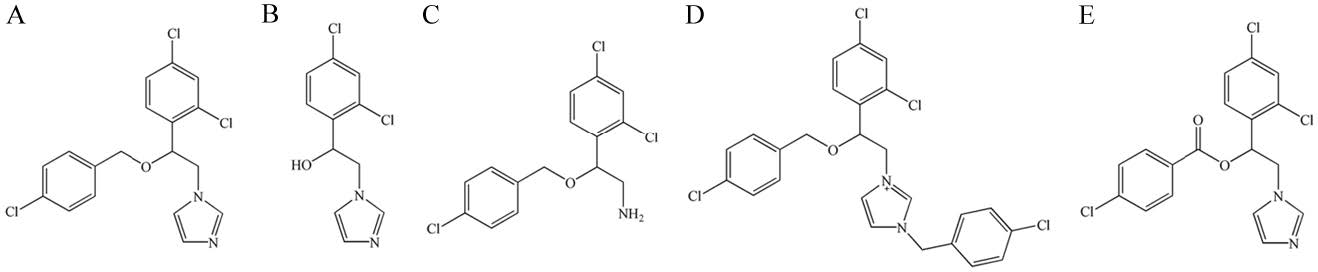
Figure 1. Chemical structures of econazole nitrate (A), econazole impurity A (B), econazole impurity B (C), econazole impurity C (D), and the oxidative degradation product of econazole nitrate (designated ECN-O) (E).
Transdermal/derma therapeutic systems usually consist of drug-loaded pressure-sensitive adhesive (PSA) matrices, which, when applied to the skin, deliver the therapeutic agent into the skin at a controlled rate and maintain a steady concentration of the therapeutic agent in the systemic circulation or at the site of application [2]. Many types of polymers may be used in transdermal therapeutic systems or dermal therapeutic systems, and polyacrylate PSAs and polyethylene glycols (PEGs) are among the most commonly used polymers [3-5]. Polyacrylate PSAs are used as the matrix material, and PEGs are used as a solvent to inhibit crystallization. Usually, they are considered to be highly stable toward acids, alkalis, oxidants, and ultraviolet (UV) irradiation and exhibit good compatibility with drugs [6-8].
Quality, safety, and efficacy are the most important attributes of pharmaceutical products [9]. Stability testing is designed to provide evidence of how the quality of a drug substance or drug product changes over time under various environmental factors, such as temperature, humidity, and light [10, 11]. In addition, stress testing of the drug can identify the likely degradation products, which in turn help establish the degradation pathways and the intrinsic stability of the molecule [12].
Pharmaceutical formulations typically contain active pharmaceutical ingredients and excipients derived from various sources, including biological, mineral, and synthetic origins. In recent decades, synthetic polymers have been developed and widely used as matrices and packaging materials in novel drug products to improve dissolution, control the release profile, and achieve targeted delivery. These polymers, with their well-defined compositions, are considered inert, safe, and stable. However, the impact of impurities existing in polymers, such as residual monomers, crosslinkers, and initiators, is often overlooked [13].
Therefore, in our preliminary study, we developed a drug-inadhesive tape with a high moisture vapour transmission rate, containing ECN and TA. However, during stability testing, we observed undesired degradation of ECN. The oxidative degradation product of ECN (designated ECN-O) was neither detected in our forced degradation studies nor recorded as a specified impurity in the Chinese Pharmacopoeia (2025 edition), European Pharmacopoeia (12th edition), or United States Pharmacopoeia and National Formulary (2026 Issue 1) (Figure 1B-D). This discrepancy raises a key question: why did ECN, which was stable under oxidative stress in solution-phase forced degradation tests, undergo oxidation in the dermal tape matrix? The answer may lie in the formulation itself: excipients may introduce impurities that alter the degradation environment, a condition absent from standard stress testing. Accordingly, we performed qualitative and quantitative analyses of the impurities and investigated the oxidative degradation mechanism.
2.1 Materials
DURO-TAK® 87-2510 (a polyacrylate pressure‑sensitive adhesive) was purchased from Henkel Co., Ltd. (Germany); ethyl stearate was purchased from Qianwei Oil Technology Co., Ltd. (Shanghai, China); PEG 400 was purchased from ErKang Pharmaceutical Co., Ltd. (Hunan, China) and Bodi Chemical Co., Ltd. (Tianjin, China); butylhydroxyanisole (BHA) was purchased from Danisco Co., Ltd. (Denmark); release liner (Scotchpak™ 9748) and backing layer (Cotran™ 9733) were kindly provided by 3M Co., Ltd. (MN, USA). Solvents and mobile phases used for analysis were of chromatographic grade and were filtered through a 0.45-μm nylon filter before use. All other reagents used in the experiments were of analytical grade.
2.2 Preparation of tapes
All tapes used in this study were prepared as follows. The PSA (DURO-TAK® 87-2510) was stirred with or without the addition of BHA and ethylenediaminetetraacetic acid (EDTA) at room temperature for 2 h. Appropriate amounts (listed in Table 1) of ECN, TA, and benzoic acid were dissolved in PEG 400 and methanol to form a solution. Then, the solution and ethyl stearate were mixed with the adhesive and stirred thoroughly for 2 h. Subsequently, the mixture was allowed to stand at 40 °C in a water bath for 30 min to remove air bubbles, spread onto the release liner (Scotchpak™ 9748) at a constant thickness of 0.3 mm, and then dried at 80 °C for 20 min. After cooling, the tapes were covered with a backing layer (Cotran™ 9733) and placed in an aluminum foil bag.

2.3 Stability test
2.4 Sample preparation
A 140 μg portion of tape (including the backing layer) was extracted with 10 mL of an ether–ethanol mixture. The solution (0.5 mL) was mixed with water (1.0 mL) and vortexed-mixed for 60 s in a 1.5-mL Eppendorf tube to precipitate the polymeric excipients. Then, the mixture was filtered through a 0.45-μm microporous membrane. The filtrate was analyzed by high-performance liquid chromatography with photodiode array detection (HPLC-PDA). A 1.0 mL aliquot of the filtrate was loaded onto a preconditioned 500 mg C18 solid-phase extraction (SPE) cartridge (Cleanert S, Agela Technologies Inc., Tianjin, China). Then, the cartridge was washed with 10% (v/v) methanol in water (1.0 mL), followed by 2.0 mL of methanol to elute the analytes. The methanol eluent was dried under a stream of N2 at room temperature. The residue was reconstituted in the mobile phase for liquid chromatography-tandem mass spectrometry (LC-MS/MS) analysis.
2.5 Synthesis of ECN-O
To a solution of ECN impurity A (194.6 mg, 0.76 mmol) in 10 mL of dichloromethane, a solution of 4-chlorobenzoic acid (174.0 mg, 1 mmol) in 10 mL of dichloromethane was added dropwise at 0 °C under argon. Then, triethylamine (0.7 mL, 5 mmol) was added dropwise under the same conditions. The reaction mixture was stirred under argon for 3 h and allowed to warm to room temperature. Then, the mixture was washed with ice-cold dilute hydrochloric acid and saturated brine, and dried over anhydrous sodium sulfate. After concentration, the product was purified using a Shimadzu LC-20AP ultrafast liquid chromatography system (Shimadzu Corporation, Kyoto, Japan) equipped with binary pumps and a UV-visible detector. The absorbance detection wavelength was 220 nm. The column temperature was maintained at room temperature. 1.0 mL of the reaction solution was injected onto a reversed-phase Zorbax SB-C18 column (150 mm×21.2 mm, 5 μm) (Agilent Technologies, Santa Clara, CA, USA). The mobile phase consisted of acetonitrile–water (80:20, v/v), and the flow rate was 7.0 mL/min.
2.6 Stability with H2O2 and O2
The oxidative forced degradation study of ECN was performed using a 3.024 mg/mL solution of ECN in ethanol, according to the following protocol: a) 1 mL of ECN solution was mixed with 1 mL of 30% (v/v) H2O2 solution, and the mixture was incubated at 60 °C for 24 h and then diluted to 1,008 μg/mL with ethanol before analysis; b) 1 mL of ECN solution was transferred to a flask, which was sealed under an oxygen atmosphere. The solution was incubated at 60 °C for 24 h with magnetic stirring and then diluted to 1,008 μg/mL with ethanol before analysis. The samples were analyzed using HPLC-PDA.
2.7 Analysis method
2.7.1 HPLC-PDA
2.7.2 LC-MS/MS
A Thermo LTQ-Orbitrap XL mass spectrometer coupled with an ultra‑high‑performance liquid chromatography system equipped with a quaternary pump, an autosampler, and a vacuum degasser was used for LC-MS/MS analysis (Thermo Electron Corporation, Waltham, MA, USA). Separation was performed on an Ultimate® XB-C18 column (250 mm×4.6 mm, 5 μm) (Welch Materials Inc., Shanghai, China) maintained at 35 °C. The mobile phase consisted of solvent A (methanol), solvent B (water), and solvent C (acetonitrile) at a flow rate of 0.5 mL/min. The linear gradient was as follows (time, min/solvent B, %/solvent C, %): 0.0/70/25, 30.0/15/80, 60.0/15/80, 60.1/70/25, 70.0/70/25. The injection volume was 5 μL. The MS and MS/MS spectra were acquired and processed using the Xcalibur® 2.1 software (Thermo Electron Corporation, Waltham, MA, USA). The mass spectrometer was operated in both positive and negative ionization modes under the following conditions: spray voltage, 4.00 kV; capillary temperature, 350 °C; capillary voltage, 39.00 V; tube lens offset, 50.0 V; sheath gas (N2) flow rate, 30 arb; auxiliary gas flow rate, 10 arb. Data were acquired in full scan and product ion scan modes over an m/z range of 120–1,000, with a collision energy of 35%.
2.7.3 Gas chromatography (GC)-MS
One gram of PSA solution (DURO‑TAK® 87‑2510, as supplied with solvent) was added to 4 mL of ethanol and vortexed for 60 s in a 10-mL centrifuge tube. Then, the mixture was filtered through a 0.45-μm microporous membrane with diatomaceous earth. The filtrate was analyzed by GC-MS.
The GC-MS system consisted of an Agilent Technologies 6890 gas chromatograph coupled with a quadrupole mass selective detector (HP 5975N) equipped with an autosampler. A DB-5-HT MS column (15 m×0.25 mm, 0.1 μm film thickness; J&W Scientific, Folsom, CA, USA) was used. The inlet temperature was 280 °C. The injection volume was 1 μL in splitless mode. Helium was used as the carrier gas at a flow rate of 1.0 mL/min. The ion source and interface temperatures were set at 150 °C and 300 °C, respectively. The oven temperature program was as follows: initial temperature of 100 °C, held for 2 min, ramped to 300 °C at 20 °C/min, and held for 5 min. Other parameters were MS Quad (150 °C), MS source (150 °C), and solvent delay (4.00 min). Selected ions were monitored: m/z 69 for azobisisobutyronitrile (AIBN) and m/z 105 for benzoyl peroxide.
2.7.4 Inductively coupled plasma atomic emission spectrometry (ICP-AES)
Table 2. Operating conditions for ICP-AES (Optima 2000DV)
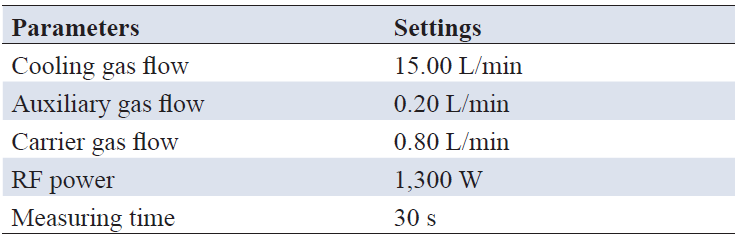
Note: RF, radio frequency; ICP, inductively coupled plasma; AES, atomic emission spectrometry.
2.8 Ethics and consent
This study did not involve human participants, human samples, human data, animal experiments, or clinical trials. Therefore, ethics approval and informed consent are not required.
3.1 Stability tests
After preparation of the dermal tape, the stability test was performed at 60 °C, and two impurities were detected in the samples (Figure 2A-C). The blank tape sample stored under the same accelerated conditions showed no interfering peaks at the retention times of ECN, TA, or the two impurities (Figure 2D), confirming that the degradation products originated from ECN rather than from the excipients. The retention times of impurity 1 and impurity 2 were 15.2 min and 21.5 min, respectively. The UV spectra obtained from the diode array detector suggested that both impurities were structurally related to ECN. In addition, ECN-O and the related impurity ECN impurity A were detected in dermal tape samples stored at 40 °C for 6 months, although at substantially lower levels than those observed under accelerated conditions (60 °C). Because degradation proceeded much more slowly at 40 °C, subsequent mechanistic studies were conducted under accelerated conditions (60 °C) to shorten the experimental period and facilitate comparison of formulation variables.
A series of formulations was subjected to stability testing to preliminarily investigate the degradation mechanism. The drug form and pH were first considered based on previous studies [14]. In the present study, degradation occurred in ECN formulated as the nitrate salt, which is generally considered more stable than the free base. Moreover, similar degradation was observed regardless of the presence of organic acids in the formulation (Figure 2E). Oxidation is likely the primary degradation pathway of ECN. This was supported by the marked inhibition of degradation in the presence of a high concentration of antioxidant (Figure 2F) or when the tapes were stored in vacuum-sealed bags isolated from air (Figure 2G). In contrast, the formulation containing vitamin E still exhibited detectable degradation products under the same storage conditions (Figure 2H), suggesting that not all antioxidants were equally effective in preventing ECN oxidation. As shown in Figure 2F, the peak area of ECN-O decreased by approximately 85% upon the addition of 0.1% BHA. Complete inhibition was achieved when 0.01% BHA and 0.02% EDTA were used in combination (Figure 2I). Then, the characteristics of the two impurities and the underlying cause of ECN instability in the tapes were further discussed. Unless otherwise specified, all formulations were stored under identical accelerated conditions (60 °C, same storage duration, sealed packaging, and atmospheric exposure) to ensure comparability between groups.
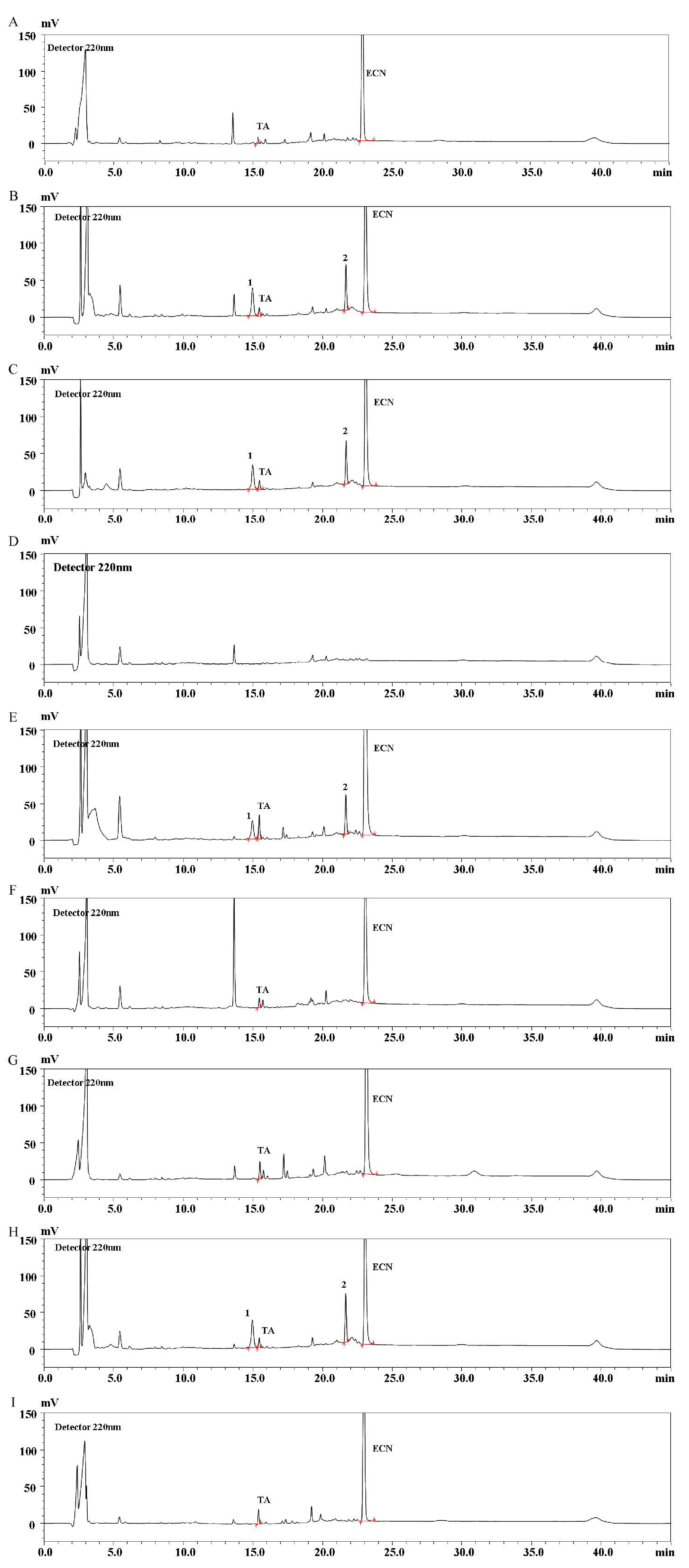
Figure 2. Typical HPLC-PDA chromatograms (λ=220 nm) of the extract solutions of ECN-TA tapes. (A) Freshly prepared formulation containing BHA; (B) Formulation without BHA stored at 60 °C for 20 d; (C) Formulation containing 0.01% BHA stored in an open aluminum foil bag at 60 °C for 20 d; (D) Blank tape stored in an open aluminum foil bag at 60 °C for 20 d; (E) Formulation without benzoic acid stored in an open aluminum foil bag at 60 °C for 20 d; (F) Formulation containing 0.1% BHA stored in an open aluminum foil bag at 60 °C for 20 d; (G) Formulation containing BHA stored in a vacuum-sealed aluminum foil bag at 60 °C for 20 d; (H) Formulation containing vitamin E stored in an open aluminum foil bag at 60 °C for 20 d; (I) formulation containing BHA and EDTA stored in an open aluminum foil bag at 60 °C for 20 d. BHA, butylhydroxyanisole; EDTA, ethylenediaminetetraacetic acid; ECN, econazole nitrate; TA, triamcinolone acetonide; HPLC, high-performance liquid chromatography; PDA, photodiode array detection.
3.2 Degradation pathway of ECN in tapes
For further investigation of the impurities observed in the stability tests, LC-MS/MS was employed. SPE was used for sample clean-up and enrichment. The SPE procedure effectively reduced interference from PEG chain fragments, resulting in improved analytical response of the drug and impurities (Supplementary Figure 1).
Figure 3A shows that the accurate mass (m/z 257.0236) and corresponding isotopic pattern of impurity 1 were consistent with impurity A (ECN impurity A, Figure 1B) listed in the European Pharmacopoeia (8th edition). However, the other two impurities (Figure 1C, 1D) listed in the pharmacopeia were not detected by selected ion monitoring analysis. The isotopic pattern of impurity 2 indicated the presence of three chlorine atoms, suggesting that this compound was structurally related to ECN. Additionally, the accurate mass (m/z 395.0116, Figure 3B) and MS/MS fragmentation pattern (Figure 3C) suggested that this compound was an ECN-O (Figure 1E). The proposed main fragmentation pathways are illustrated in Figure 3D.
Figure 4A, 4B indicate that, in the dermal tapes, ECN impurity A may represent a secondary degradation product of ECN-O, as 4-chlorobenzoic acid ([M-H]- m/z 155) was detected in the sample, whereas 4-chlorobenzyl alcohol ([M+H]+ m/z 143) was not observed. In addition, ECN-O was consistently detected at higher levels than ECN impurity A (Figure 2). Moreover, ECN impurity-A and ECN-O were also detected in tape samples stored at 40 °C for 6 months, as evidenced by the extracted ion chromatograms of m/z 257 and m/z 395, respectively (Figure 4C, 4D). Therefore, in addition to the impurities listed in the pharmacopeias, ECN-O should also be considered in the stability studies of ECN.
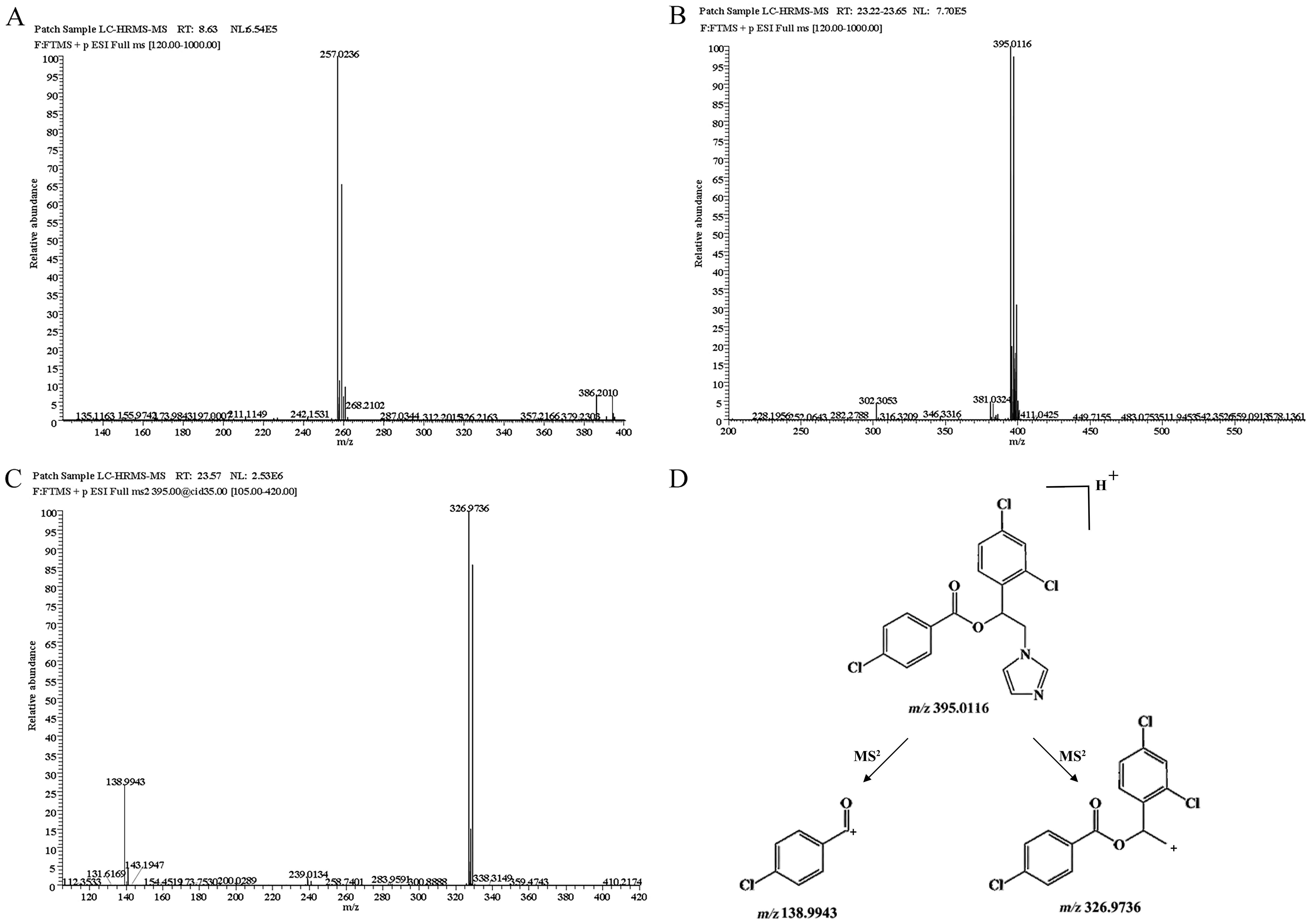
Figure 3. Typical HRMS spectra for econazole nitrate degradation products in tapes stored at 60 °C for 20 d. (A) Full MS scan of ECN impurity A; (B) Full MS scan of ECN-O; (C) Full MS2 scan of m/z 395; (D) Proposed main fragmentation pathways of ECN-O by ESI-MS. HRMS, high-resolution mass spectrometry; ECN, econazole nitrate; ECN-O, oxidative degradation product of ECN; ESI, electrospray ionization; FTMS, Fourier transform mass spectrometry; p ESI, positive electrospray ionization; NL, normalized level; RT, retention time; LC, liquid chromatography; MS, mass spectrometry.
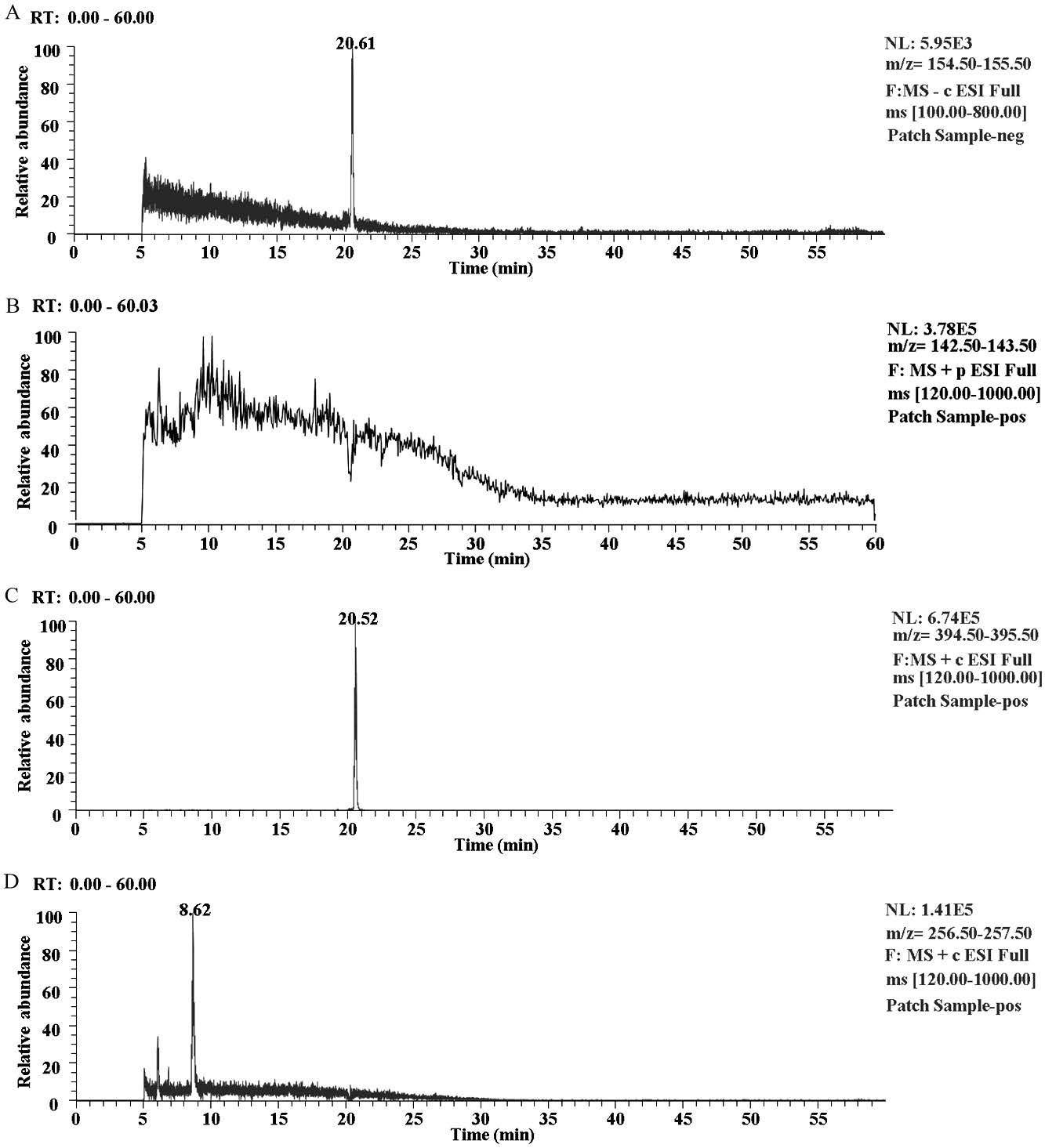
Figure 4. Typical LC-MS extracted ion chromatograms of tape samples. (A) m/z 143 and (B) m/z 155 from samples stored at 60 °C for 20 d; (C) m/z 257 and (D) m/z 395 from samples stored at 40 °C for 6 months. NL, normalized level; RT, retention time; LC, liquid chromatography; MS, mass spectrometry; p ESI, positive electrospray ionization; c ESI, capillary electrospray ionization.
3.3 Structural characterization and quantitative analysis of ECN-O
To confirm the structure assigned to ECN-O and to develop a quantitative analysis method, ECN-O was synthesized from 4-chlorobenzoic acid and 1-(2,4-dichlorophenyl)-2-(1H-imidazole-1-yl) ethanol (namely ECN impurity A) via a one-step reaction. The structure of the synthetic compound was characterized by proton nuclear magnetic resonance, high-resolution mass spectrometry, and UV spectroscopy (Supplementary Figures 2-4) and confirmed to be identical to ECN-O. The chromatographic behavior of the compound was also consistent with that of the degradation product observed in dermal tapes. These results confirmed the structural identity of ECN-O as the degradation product formed in the dermal tapes. The HPLC method for simultaneous quantification of ECN, TA, ECN impurity A, and ECN-O was validated in terms of specificity, linearity, precision, and accuracy. A summary of the validation results is as follows: linearity (R2≥0.9995 for all analytes over the tested concentration ranges), intra-day precision (relative standard deviation =1.84%), inter-day precision (relative standard deviation =1.43%), and accuracy (98.9%–101.1%). Full validation data are provided in the Supplementary Material (Supplementary Tables 1-3 and Supplementary Figure 5).
Studying impurity profiles remains a major challenge in the development of pharmaceutical products due to low impurity levels and poorly understood drug-excipient interactions [15]. Commercial ECN products are mainly available as creams and gels. In this study, a dermal tape containing ECN and TA was developed, in which a novel ECN impurity was observed. The underlying degradation mechanism was therefore investigated.
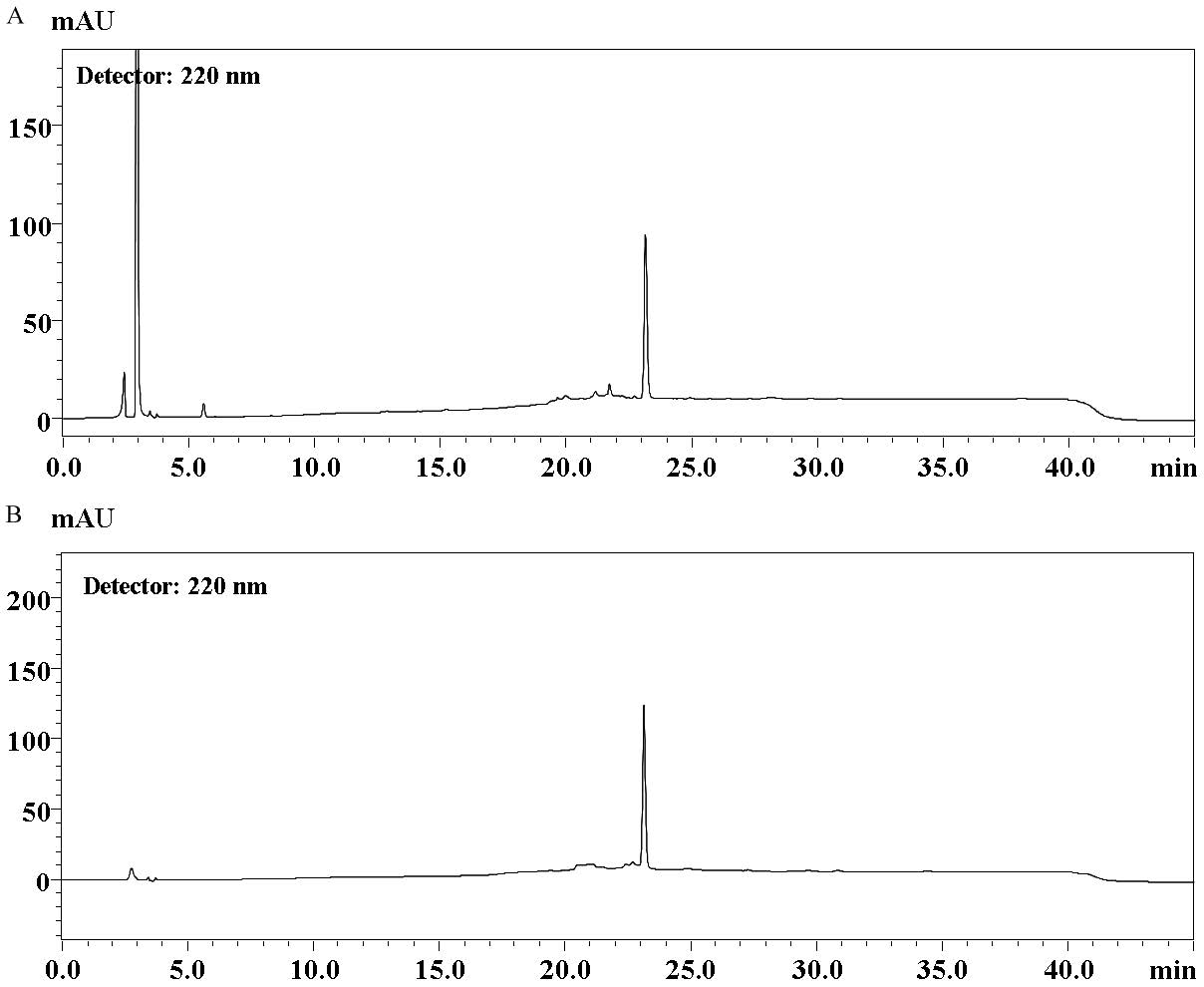
Although peroxides and secondary products formed via autoxidation in PEG have often been associated with drug-excipient interactions leading to instability in pharmaceutical formulations, this pathway was not considered to be the primary cause of ECN degradation in the present study, as oxidation of ECN was not observed in tapes stored in the absence of air exposure (Figure 2G) [16]. This suggests that no external oxidizing species were introduced within the formulation. Therefore, ECN degradation in the tapes is likely to involve atmospheric oxygen-mediated oxidation [17]. However, ECN was shown to be stable against oxygen or H2O2 in the ordinary forced degradation test (Figure 5) and in other pharmaceutical formulations. These results indicate that the oxidative degradation observed in the tapes is likely facilitated by reactive impurities present in the excipients.
Although oxidative degradation of ECN in pharmaceutical formulations has not been previously reported, the product ECN-O is not a novel structure and has been reported to be formed from ECN at a yield of 10–15% with heat (77 °C), under pressure (6.8 atm), and initiator/catalyst-mediated conditions [18]. Based on the previous results, the unexpected instability of ECN in tapes might be attributed to traces of reactive impurities derived from excipients [15].
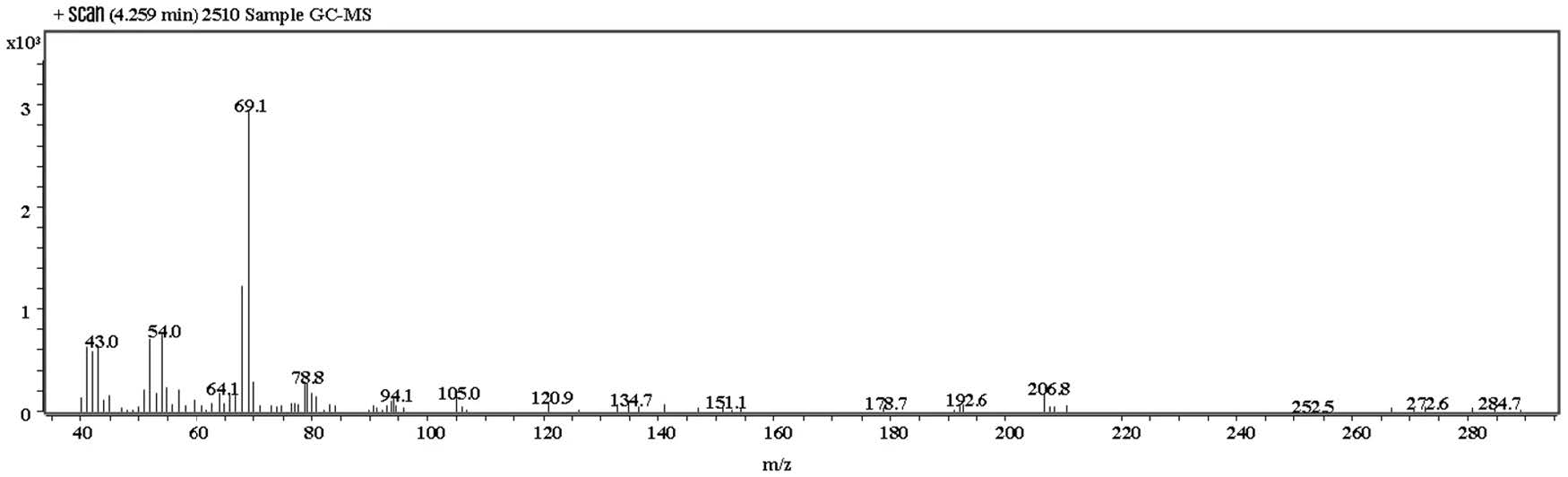
PSA is the matrix of the dermal tape and has not been used in other ECN formulations. Since polymerization of acrylates is typically initiated by free-radical initiators such as azo or peroxy compounds (e.g., AIBN or benzoyl peroxide), residual initiators or their fragments may remain in the final products and potentially contribute to ECN degradation at high-temperature and high-pressure conditions [18-22]. In the present study, AIBN was detected in the adhesive by GC-MS (Figure 6) [23]. However, such initiators are consumed during the polymerization process. This suggests that the amount of ECN-O should depend on the amount of residual initiator. However, AIBN in the adhesive sample was present only at a trace level, which is inconsistent with the amount of ECN-O detected in the tapes. Thus, the initiator cannot be the sole reason for the degradation [24].
Although AIBN and metal ions can individually promote radical generation, their coexistence likely exerts a synergistic effect on ECN oxidation. AIBN thermally decomposes to form carbon‑centered radicals (e.g., cyanoisopropyl radicals), which react with molecular oxygen to form peroxyl radicals: a process that initiates the radical chain [25]. Transition metal ions may further increase the steady‑state concentration of reactive oxygen species. Moreover, metal ions can catalyze the decomposition of hydroperoxides (ROOH) formed during polymer autoxidation, generating additional alkoxyl (RO·) and peroxyl (ROO·) radicals. Thus, AIBN may contribute to the initiation of radical reactions, whereas trace metal ions may further promote oxidative processes through catalytic effects. Their combined presence creates a more aggressive oxidative environment than either alone, which is consistent with the observation that ECN remained stable in forced degradation tests (where these impurities were absent) but degraded significantly in the dermal tape matrix.
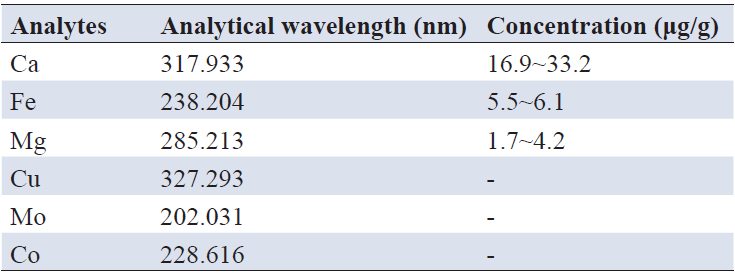
In the dermal tape formulation, PEG 400 may contain metal ions, which can be associated with the interaction between metal ions and the ether oxygen atoms in C-O-C segments of PEG molecular chains via electrostatic interaction, thereby facilitating the dissolution of metal ions in PEG [26-28]. It is well known that metal ions, as efficient catalysts, can promote drug degradation in various pharmaceutical preparations [29]. ICP-AES was employed to detect PEG 400 samples used in the study, which were from different manufacturers and batches, and Fe, Ca, and Mg were observed (Table 3). Direct addition of metal ions to the hydrophobic PSA matrix was not feasible due to solubility limitations. Therefore, EDTA was used as a chelating agent to indirectly assess the role of metal ions. The substantial suppression of ECN oxidation upon EDTA addition (Figure 2I) supports the catalytic involvement of metal ions.
Identifying the possible sources of metal ions in PEG 400 is important for formulation development and quality control. Trace metal contamination may be introduced during the manufacturing, handling, storage, or packaging processes of pharmaceutical excipients. Although the PEG 400 samples used in this study were stored in polypropylene bottles, exposure to metal surfaces during industrial processing cannot be excluded. From an industrial perspective, monitoring trace metal levels in PEG 400 and controlling metal-related risks may help improve formulation stability. In addition, the use of metal-chelating agents such as EDTA may serve as a practical strategy to mitigate oxidation-related degradation. We therefore recommend routine testing of PEG 400 for metal ion content (e.g., by ICP‑AES as described in this study) and requesting a certificate of analysis including trace metal limits from suppliers [30]. Alternatively, the addition of a chelating agent such as EDTA can be considered as an effective risk mitigation strategy when the metal ion burden cannot be entirely eliminated.
EDTA was added into the formulation as an antioxidant synergist to remove the metal ions, and no ECN-O was observed in these tape samples (Figure 2I) [26]. As shown in Figure 2F, the peak area of ECN-O decreased by approximately 85% upon addition of 0.1% BHA. Complete inhibition was achieved when both 0.01% BHA and 0.02% EDTA were incorporated (Figure 2I). Therefore, the metal ions present in PEG 400 were considered to be the key contributors to the oxidative degradation of ECN in dermal tapes, and this degradation could be effectively suppressed by the combined application of BHA and EDTA as antioxidants and antioxidant synergists, respectively.
The combined use of BHA and EDTA effectively suppressed ECN-O formation (Figure 2I). Their stabilizing effects are likely complementary rather than overlapping. BHA primarily acts as an antioxidant by quenching reactive radical species involved in the oxidation process, whereas EDTA reduces oxidation by chelating trace metal ions that may catalyze radical generation. Therefore, BHA mainly suppresses ongoing radical reactions, while EDTA limits the formation of new reactive species by inhibiting metal-ion-catalyzed processes. The combined use of these two additives therefore provides more effective protection against ECN oxidation than either additive alone.
PEG 400 is widely used as a cosolvent, vehicle, and plasticizer in pharmaceutical products such as capsules, solid dispersions, ointments, orally disintegrating films, and transdermal therapeutic systems [31-36]. However, most research has focused on the stability of PEG 400 itself and the effect of organic impurities in PEG 400 on drug stability [37-39]. The present study suggests that some metal ions may exist in PEG 400 and that these ions can result in drug degradation. Although the PEG 400 samples used in the experiments were stored in polypropylene bottles isolated from direct metal contact, trace metal ions may still be introduced during manufacturing, transportation, or repackaging processes.
ECN-O has not been observed in pharmaceutical products or included in pharmacopeias. In the present study, we found that ECN-O was the main degradation product of ECN in a variety of dermal tapes under stress conditions. ECN in the tapes was oxidized by atmospheric oxygen via a free-radical mechanism with the assistance of impurities, including AIBN and metal ions. In addition, the metal ions in PEG 400 are considered the key contributing factors. Thus, the degradation of ECN in tapes can be effectively reduced by the combined application of an antioxidant and a complexing agent.
Polymers are widely used as pharmaceutical excipients, and the impurities existing in polymers should be discussed in detail when developing pharmaceutical products. The present study demonstrates that trace impurities in commonly used excipients, such as residual initiators in pressure‑sensitive adhesives and metal ions in PEG 400, can qualitatively alter the degradation behavior of an active pharmaceutical ingredient. Therefore, when unexpected degradation or formation of related substances occurs during formulation development, the following strategies may be considered: (i) screening excipients for potentially reactive trace impurities (e.g., metal ions by ICP‑AES, residual initiators by GC‑MS); (ii) requesting certificates of analysis from suppliers that include trace impurity limits; and (iii) considering the addition of stabilizers such as antioxidants and chelating agents when unavoidable impurity‑related degradation risks are identified. These findings underscore the importance of thorough excipient characterization in the design of stable drug‑in‑adhesive dermal tapes and other polymer‑based pharmaceutical products.
Author contributions
Xue Ding performed the investigation, formal analysis, and data curation, and wrote the original draft. Yuming Sun contributed to the investigation and methodology. Huijun Li performed data curation and reviewed and edited the manuscript. Xiaohui Li performed data analysis and visualization. Rui Yang contributed to validation and analytical support. Qing Wang conceived and supervised the study, and was responsible for funding acquisition and project administration. All authors read and approved the final manuscript.
Funding
This work was supported by the Project for Development of Innovative Excipients for External Preparations of Tibetan Medicine (XZ202601J0033), the State Key Laboratory of Drug Regulatory Science Project (2026SKLDRS03083), and the 2022 Innovation and Entrepreneurship Competition for Research Teams in Zhongshan District, Dalian, China, for the project Development of a cannabidiol nanolipid nasal delivery system.
Data availability
All data supporting the findings of this study are available from the corresponding author (Qing Wang, qwang@dlut.edu.cn) upon reasonable request.
Ethics approval and consent to participate
Not applicable.
Consent for publication
Not applicable.
Competing interests
The authors declare that they have no competing interests.
Acknowledgements
The authors thank all colleagues and staff members for their technical assistance and helpful discussions.
[1] Bachhav YG, Mondon K, Kalia YN, Gurny R, Möller M. Novel micelle formulations to increase cutaneous bioavailability of azole antifungals. J Control Release. 2011 Jul 30;153(2):126-132. https://doi.org/10.1016/j.jconrel.2011.03.003
[2] Tan HS, Pfister WR. Pressure-sensitive adhesives for transdermal drug delivery systems. Pharm Sci Technol Today. 1999 Feb 1;2(2):60-69. https://doi.org/10.1016/S1461-5347(99)00119-4
[3] Sun Y, Fang L, Zhu M, Li W, Meng P, Li L, et al. A drug-in-adhesive transdermal patch for S-amlodipine free base: In vitro and in vivo characterization. Int J Pharm. 2009 Dec 1;382(1):165-171. https://doi.org/10.1016/j.ijpharm.2009.08.031
[4] Sachdeva V, Bai Y, Kydonieus A, Banga AK. Formulation and optimization of desogestrel transdermal contraceptive patch using crystallization studies. Int J Pharm. 2013 Jan 30;441(1):9-18. https://doi.org/10.1016/j.ijpharm.2012.12.014
[5] Jain P, Banga AK. Inhibition of crystallization in drug-inadhesive-type transdermal patches. Int J Pharm. 2010 Jul 15;394(1):68-74. https://doi.org/10.1016/j.ijpharm.2010.04.042
[6] Tuntiyasawasdikul S, Limpongsa E, Jaipakdee N, Sripanidkulchai B. A monolithic drug-in-adhesive patch of methoxyflavones from kaempferia parviflora: In vitro and in vivo evaluation. Int J Pharm. 2015 Jan 30;478(2):486-495. https://doi.org/10.1016/j.ijpharm.2014.11.073
[7] Pang B, Ryu CM, Kim HI. Effect of naphthyl curing agent having thermally stable structure on properties of UV-cured pressure sensitive adhesive. J Ind Eng Chem. 2014 Sep 25;20(5):3195-3200. https://doi.org/10.1016/j.jiec.2013.11.065
[8] Banerjee S, Chattopadhyay P, Ghosh A, Datta P, Veer V. Aspect of adhesives in transdermal drug delivery systems. Int J Adhes Adhes. 2014 Apr;50:70-84. https://doi.org/10.1016/j.ijadhadh.2014.01.001
[9] Maggio RM, Vignaduzzo SE, Kaufman TS. Practical and regulatory considerations for stability-indicating methods for the assay of bulk drugs and drug formulations. TrAC Trends Anal Chem. 2013 Sep;49:57-70. https://doi.org/10.1016/j.trac.2013.05.008
[10] Stability testing of new drug substances and products q1a(r2): ICH Q1A(R2), International Council for Harmonisation of Technical Requirements for Pharmaceuticals for Human Use: 2003-02-06.
[11] Liang K, Yang L, Liu B, Wang X, Wang L, Kang J, et al. Insights into the mechanism of reversible blood-brain barrier opening via second near-infrared region excited gold nanorods photothermal effect: Regulation of the tight junction protein occludin. Smart Mol. 2025 Sep;3(3):e70016. https://doi.org/10.1002/smo2.70016
[12] Singh S, Junwal M, Modhe G, Tiwari H, Kurmi M, Parashar N, et al. Forced degradation studies to assess the stability of drugs and products. TrAC Trends Anal Chem. 2013 Sep 1;49:71-88. https://doi.org/10.1016/j.trac.2013.05.006
[13] Gouget H, Noe G, Barrail-Tran A, Furlan V. UPLC-MS/MS method for the simultaneous quantification of bictegravir and 13 others antiretroviral drugs plus cobicistat and ritonavir boosters in human plasma. J Pharm Biomed Anal. 2020 Mar 20;181:113057. https://doi.org/10.1016/j.jpba.2019.113057
[14] Canavesi R, Aprile S, Giovenzana GB, Di Sotto A, Di Giacomo S, Del Grosso E, et al. New insights in oxybutynin chemical stability: Identification in transdermal patches of a new impurity arising from oxybutynin N-oxide rearrangement. Eur J Pharm Sci. 2016 Mar 10;84:123-131. https://doi.org/10.1016/j.ejps.2016.01.015
[15] Zhang K, Pellett JD, Narang AS, Wang YJ, Zhang YT. Reactive impurities in large and small molecule pharmaceutical excipients – a review. TrAC Trends Anal Chem. 2018 Apr 1;101:34-42. https://doi.org/10.1016/j.trac.2017.11.003
[16] Musakhanian J, Rodier JD, Dave M. Oxidative stability in lipid formulations: A review of the mechanisms, drivers, and inhibitors of oxidation. AAPS PharmSciTech. 2022 May 20;23(5):151. https://doi.org/10.1208/s12249-022-02282-0
[17] Schoneich C. Primary processes of free radical formation in pharmaceutical formulations of therapeutic proteins. Biomolecules. 2023 Jul 17;13(7):1142. https://doi.org/10.3390/biom13071142
[18] Oyler AR, Naldi RE, Facchine KL, Burinsky DJ, Cozine MH, Dunphy R, et al. Characterization of autoxidation products of the antifungal compounds econazole nitrate and miconazole nitrate. Tetrahedron. 1991 Aug 12;47(33):6549-6560. https://doi.org/10.1016/S0040-4020(01)82309-7
[19] Pabin-Szafko B, Wisniewska E, Hefczyc B, Zawadiak J. New azo-peroxidic initiators in the radical polymerization of styrene and methyl methacrylate. Eur Polym J. 2009 May;45(5):1476-1484. https://doi.org/10.1016/j.eurpolymj.2009.02.001
[20] Ōnishi Y, Kodaira K, Ito K. Some unsymmetrical azo compounds as initiators in radical polymerization. Polymer. 1982 Apr;23(4):630-631. https://doi.org/10.1016/0032-3861(82)90107-0
[21] Chen L, Wu F. Preparation and characterization of pure polyacrylate polymer colloid through emulsion polymerization using a novel initiator. Colloids Surf A Physicochem Eng Asp. 2011 Dec 5;392(1):300-304. https://doi.org/10.1016/j.colsurfa.2011.10.008
[22] Allı A, Hazer B, Baysal BM. Determination of solubility parameters of cross-linked macromonomeric initiators based on polypropylene glycol. Eur Polym J. 2006 Nov;42(11):3024-3031. https://doi.org/10.1016/j.eurpolymj.2006.07.012
[23] Sun F, Hu Y, Zhu G, Li S, Du H, Wang L. Determination of Residual Monomers in Synthesized Acrylic PSAs by Gas Chromatography. J Adhes Sci Technol. 2010;24(2):347-357. https://doi.org/10.1163/016942409x12584625925141
[24] Robert Czech Z. Pressure-sensitive acrylic adhesives (PSAs): How it began and the present state of art. Chem Texts. 2024 Jun;10(3). https://doi.org/10.1007/s40828-024-00189-w
[25] Moad G, Rizzardo E, Thang SH. Radical addition–fragmentation chemistry in polymer synthesis. Polymer. 2008;49(5):1079-1131. https://doi.org/10.1016/j.polymer.2007.11.020
[26] Rowe RC, Sheskey PJ, Quinn ME. Handbook of pharmaceutical excipients. 6th ed. London: Pharmaceutical Press; 2009. 888 p.
[27] Hemenway JN, Carvalho TC, Rao VM, Wu Y, Levons JK, Narang AS, et al. Formation of reactive impurities in aqueous and neat polyethylene glycol 400 and effects of antioxidants and oxidation inducers. J Pharm Sci. 2012 Sep;101(9):3305-3318. https://doi.org/10.1002/jps.23198
[28] Sui N, Huang K, Lin J, Li X, Wang X, Xiao C, et al. Removal of Al, Fe and Si from complex rare-earth leach solution: A three-liquid-phase partitioning approach. Sep Purif Technol. 2014 Apr 30;127:97-106. https://doi.org/10.1016/j.seppur.2014.02.035
[29] Hotha K. Drug-excipient interactions: Case studies and overview of drug degradation pathways. Am J Anal Chem. 2016;7:107-140. https://doi.org/10.4236/ajac.2016.71011
[30] Li G, Schoneker D, Ulman KL, Sturm JJ, Thackery LM, Kauffman JF. Elemental impurities in pharmaceutical excipients. J Pharm Sci. 2015 Dec;104(12):4197-4206. https://doi.org/10.1002/jps.24650
[31] Hong SS, Lee SH, Lee YJ, Chung SJ, Lee MH, Shim CK. Accelerated oral absorption of gliclazide in human subjects from a soft gelatin capsule containing a PEG 400 suspension of gliclazide. J Control Release. 1998 Feb 12;51(2):185-192. https://doi.org/10.1016/S0168-3659(97)00167-3
[32] Unga J, Tajarobi F, Norder O, Frenning G, Larsson A. Relating solubility data of parabens in liquid PEG 400 to the behaviour of PEG 4000-parabens solid dispersions. Eur J Pharm Biopharm. 2009 Oct;73(2):260-268. https://doi.org/10.1016/j.ejpb.2009.06.003
[33] Joshi HN, Tejwani RW, Davidovich M, Sahasrabudhe VP, Jemal M, Bathala MS, et al. Bioavailability enhancement of a poorly water-soluble drug by solid dispersion in polyethylene glycol–polysorbate 80 mixture. Int J Pharm. 2004 Jan 9;269(1):251-258. https://doi.org/10.1016/j.ijpharm.2003.09.002
[34] Liew KB, Tan Y, Kok-Khiang P. Effect of polymer, plasticizer and filler on orally disintegrating film. Drug Dev Ind Pharm. 2014 Jan;40(1):110-119. https://doi.org/10.3109/03639045.2012.749889
[35] Weng W, Quan P, Liu C, Zhao H, Fang L. Design of a drug-in-adhesive transdermal patch for risperidone: Effect of drug-additive interactions on the crystallization inhibition and in vitro/in vivo correlation study. J Pharm Sci. 2016 Oct;105(10):3153-3161. https://doi.org/10.1016/j.xphs.2016.07.003
[36] Pisipati A, Chavali Venkata Satya S. Formulation and characterization of anti hypertensive transdermal delivery system. J Pharm Res. 2013 May;6(5):551-554. https://doi.org/10.1016/j.jopr.2012.12.003
[37] Han S, Kim C, Kwon D. Thermal/oxidative degradation and stabilization of polyethylene glycol. Polymer. 1997 Jan;38(2):317-323. https://doi.org/10.1016/S0032-3861(97)88175-X
[38] Han S, Kim C, Kwon D. Thermal degradation of poly (ethyleneglycol). Polym Degrad Stab. 1995;47(2):203-208. https://doi.org/10.1016/0141-3910(94)00109-L
[39] Kochling JD, Miao H, Young CR, Looker AR, Shannon M, Montgomery ER. Understanding the degradation pathway of a poorly water-soluble drug formulated in PEG-400. J Pharm Biomed Anal. 2007 Apr 11;43(5):1638-1646. https://doi.org/10.1016/j.jpba.2006.12.011
ISSN: 3105-7713
Volume 1, Issue 1
15 June – 14 September
Pages: 1 – 65


 Log In

 On This Page
 CITE
CITE